
In today's lesson, we are going to uncover the surprising advantages of learning guitar theory. Guitar enthusiasts often find themselves at a crossroads: Should they stick with learning chords and strumming patterns, or delve into the depths of music theory? While chords are the building blocks of many songs, understanding guitar theory provides a plethora of advantages that can take your playing to the next level.
The Foundations of Guitar Theory
Understanding Scales
Scales are the backbone of guitar theory. By learning scales, you gain insight into the structure of music. This knowledge allows you to:
- Identify Key Signatures: Knowing scales helps you understand the key a piece of music is in, making it easier to improvise and compose. There are 12 notes to the musical alphabet, called the chromatic scale. Learn the notes to all 12 keys for fretboard mastery.
A A# B C C# D D# E F F# G G#
- Enhance Melodic Playing: With scales, you can create solos and melodies that fit perfectly within the context of a song. This is done by doing three things:
1: Learn the scale patterns across the fretboard.
2: Master where to play them within any key.
3: Learn techniques such as string bending, slides, hammer-ons, etc, to give them expression.
Chord Construction
Beyond memorizing chord shapes, guitar theory teaches you how chords are constructed. This includes:
- Triads and Seventh Chords: Understanding how these chords are formed helps you create richer, more complex sounds. Here is an example of three triads. A major, B7, and D minor.
A major

B7
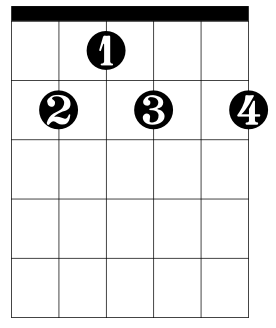
D minor
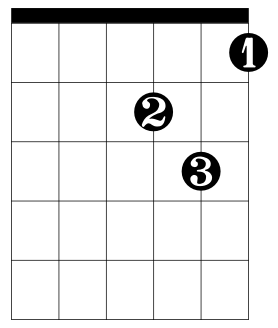
These and many more like them are very common in many songs and should be learned and applied in your compositions.
- Chord Progressions: This is where you take chord examples like the ones above and put them into a sequence. Understanding the theory of chord progressions enables you to predict and create seamless transitions between chords.
The most common progression is the I-iV-V progression. Let's look at this in more detail using the key of C major.
C Major: C D E F G A B = 1 2 3 4 5 6 7
The 1st, 4th, and 5th chords would be C, F, and G.
This concept works with all the keys. There are hundreds, if not thousands, of songs written with this progression. U recommend you learn it in keys such as A, C, D, G, & E to get familiar with it. Once you do, you can then compose a song of your own with this very popular form.t
The Benefits of Learning Guitar Theory
Improved Improvisation Skills
One of the most exciting aspects of music is improvisation. Guitar theory equips you with the tools to:
- Play with Freedom: Improvising is the ability to make music without looking at sheet music. By understanding scales and modes, you can improvise with confidence and creativity. This way, you'll be ready at a moment's notice in any situation.
- Adapt to Different Styles: Whether it's jazz, rock, or blues, guitar theory helps you adapt your playing style to various genres. The reason for this is because of your understanding of the notes, their intervals, and their relationships they have with each other.
Enhanced Songwriting Abilities
Learning guitar theory can significantly boost your songwriting skills by enabling you to:
- Craft Unique Compositions: With a solid understanding of harmony and melody, you can create songs that stand out. You do this by controlling emotion. Remember, music is all about crafting certain types of emotion. The knowledge of in-depth theory allows you to pull from a variety of emotions when creating your songs.
- Experiment with New Ideas: Timing is everything in music. Knowing theory and putting it into practical application allows you to master it. Theory provides a framework for experimenting with unconventional chord progressions and time signatures. Once again, allowing you to control timing, rhythm, and emotion within your songs.
Better Communication with Other Musicians
When collaborating with other musicians, a shared understanding of music theory facilitates:
- Effective Communication: By learning theory, you learn the language of music. Key signatures, chord progressions, scales, key changes, tempo, and dynamics. Discussing these things in conversation with other musicians becomes clearer and more efficient.
- Collaborative Creativity: If you find musicians like you who understand music theory (which most guitarists unfortunately don't), you can collaborate more creatively. Theory allows for more informed discussions about arrangement and composition, leading to innovative musical creations.
Practical Steps to Learning Guitar Theory
Start with the Basics
Begin by familiarizing yourself with basic music theory concepts, such as:
- The Musical Alphabet: Understanding the notes and their relationships. This is also called the chromatic scale. Notes that reside next to each other.
A A# B C D D# E F F# G G# = the 12 notes of the musical alphabet.
- Intervals: The distance between notes, which is crucial for building scales and chords. These can be broken down into whole steps and half steps. Also referred to as whole tones and semitones.
Half Step or Semitone = One fret.
Whole Step or Tone = Two Frets.
B to C would be one fret apart, which would be a half step, or semitone.
B to C# would be two frets apart, which would be a whole step or whole tone.
Look at all twelve notes in the musical alphabet and see which ones are whole steps and which ones are half steps. You'll also notice that all of them have a sharp after them, except for two. This is very important to know. So make sure you learn and memorize this.
Apply Theory to Practice
Integrating theory into your practice routine daily will help you by:
- Analyzing Songs: Break down your favorite songs into bite-sized chunks. Separate them into sections. Intro, verse, chorus, etc. This allows you to understand their theoretical structure and use that insight to compose compelling musical landscapes of your own.
- Jamming with Theory: When you use scales and modes in improvisation sessions, it reinforces your learning. It also gives you a chance to explore uncharted territories. Start with the basics. Pentatonic scales, blues scales, and progress to playing modes.
Major Pentatonic Scale: 1 2 3 5 6
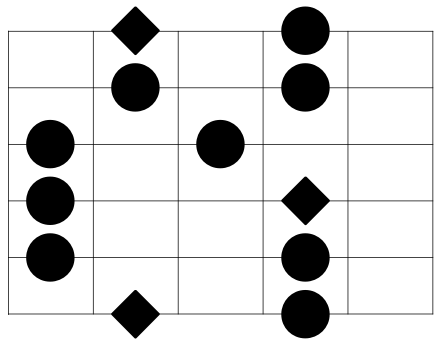
Minor Pentatonic Scale: 1 b3 4 5 b7
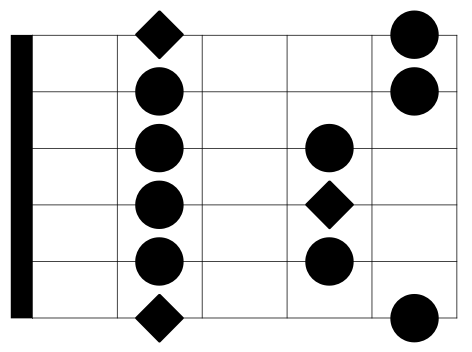
Major Blues Scale: 1 2 b3 3 5 6
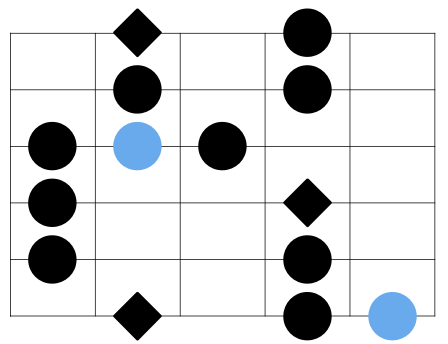
Minor Blues Scale: 1 b3 4 b5 5 b7
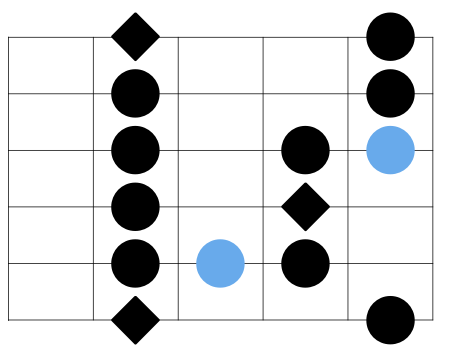
Phrygian Mode: 1 b2 b3 4 5 b6 b7
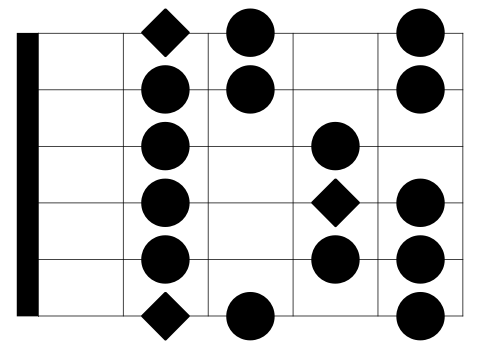
Look closely at these scales. You will see that the minors have a flat 3rd note. This concept works with both scales and chords. If you have a major chord and want to make it a minor chord, find the 3rd note and flatten it by one fret. Now, the question is, is the Phrygian mode major or minor?
Seek Guidance
Consider taking lessons or using online resources to deepen your understanding of guitar theory. Many platforms offer structured courses that cover everything from basic concepts to advanced techniques. This approach will help you to avoid making costly mistakes or developing habits that can be hard to break later. Not to mention, it can make learning a lot more fun if you have someone to do it with.
Dive Deeper For Enhanced Learning
If you'd like to learn more about how guitar theory can enhance your guitar playing and increase your overall musicianship, I recommend you check out the book I authored, Learn Guitar Chord Theory.

When you take time to develop an extended chord vocabulary and mix that with a full understanding of how they work with each other, you not only improve your guitar playing rhythmically, but also in melody. The more you know about how chords are constructed, you will be able to utilize scales to complement them harmoniously.
This comprehensive training guide is full of diagrams and easy-to-understand notation, and step-by-step instructions for easy learning. You are also presented with practical exercises and learning assessments to make sure you fully understand the lessons. Currently on sale, this handy companion will allow you to take your guitar playing to the next level in no time.
Additional Help Available
And in addition to all that, you will receive free email support i you happen to get stuck on a lesson, or have any questions. Just contact me at my website, and I'll be happy to help. With that kind of assistance, you can't go wrong. You'll be a guaranteed success. So if you're serious about learning, grab the book and get started today!
Final Thoughts
While learning guitar theory may seem daunting at first, the benefits far outweigh any initial challenges. By going beyond chords and diving into the intricacies of theory, you'll open up new possibilities for your playing, songwriting, and overall musicianship. Whether you're a beginner or an experienced guitarist, embracing guitar theory will undoubtedly enhance your musical journey.
Thanks for your time today, and I hope you feel like you learned something. Keep practicing daily, and good luck with your studies. If you need any help, I'm here for you. Be sure to follow me on Social Media and never miss an update.
Sincerely, Dwayne Jenkins