
Understanding guitar scale theory is like possessing a key that unlocks the door to musical creativity and mastery. While it might seem daunting at first, grasping the theory behind scales is essential for any guitarist looking to elevate their playing. Let's explore why this knowledge is so powerful and indispensable.
#1.) The Foundation of Musical Understanding
What is Guitar Scale Theory?
Guitar scale theory involves the study of scales, which are sequences of notes ordered by pitch. These sequences serve as the building blocks of music, forming the basis for melodies, riffs, solos, and even complex compositions. By learning scale theory, guitarists gain insight into the structure of music, enabling them to understand how songs are constructed and how different notes and chords relate to each other.
Why Scales Matter
Scales are much more than just finger exercises. They provide the framework for improvisation, allowing musicians to express their creativity fluently. Mastering scales also enhances a guitarist's ability to compose, enabling them to craft melodies that are harmonically rich and emotionally resonant.
- Strengthening Musical Memory
- Understanding and practicing scales can significantly enhance a guitarist's musical memory. By internalizing the patterns and structures of various scales, players can recall and apply musical concepts more easily, leading to faster learning and retention of new pieces.
- Encouraging Personal Expression
- A firm grasp of scale theory empowers guitarists to express their personal musical style. With the freedom to explore different scales and modes, players can develop a unique sound that reflects their individual artistry and emotional expression.
#2.) Enhancing Improvisation Skills
Playing with Freedom
Improvisation is the art of creating music spontaneously. With a solid understanding of scale theory, guitarists can improvise with confidence, knowing which notes will work well together. This knowledge allows for seamless transitions between notes and chords, fostering an intuitive and expressive playing style.
Developing Musical Vocabulary
Scales provide a rich vocabulary of musical ideas. By studying different scales, guitarists can expand their repertoire of sounds and styles. This diversity enables them to adapt to various musical genres and collaborate more effectively with other musicians.
- Enhancing Fingerboard Navigation
- Understanding scale theory can significantly improve a guitarist’s ability to navigate the fingerboard. Familiarity with scales helps players locate notes quickly and move fluidly across the fretboard, facilitating more efficient and expressive playing.
- Developing Rhythmic Versatility
- Studying scales allows guitarists to experiment with different rhythmic patterns, enhancing their timing and rhythmic versatility. This skill is particularly useful when playing in various musical contexts or when creating dynamic performances.
#3.) Boosting Confidence and Creativity
Building Confidence
Knowledge of scale theory gives guitarists the confidence to tackle unfamiliar pieces of music. They can identify the key of a song and use their understanding of scales to navigate through it, making it easier to play along or develop unique interpretations.
Sparking Creativity
With a strong grasp of scale theory, guitarists can break free from repetitive playing patterns. They can experiment with different scale variations and create fresh, innovative musical ideas. This creativity is crucial for songwriting and developing a unique musical voice.
- Refining Technique and Precision
- Understanding and practicing scales can significantly improve a guitarist’s technique and precision. By regularly incorporating scale exercises into practice routines, players develop better finger positioning and control, which are vital for playing clean and articulate notes.
- Connecting Theory with Practice
- Studying guitar scale theory bridges the gap between theoretical knowledge and practical application. This connection allows guitarists to apply their understanding of scales directly to their instrument, making theoretical concepts tangible and enhancing their overall musicianship.
#4.) Practical Applications of Scale Theory
Composing and Arranging
Understanding scales is invaluable for composing and arranging music. Guitarists can craft melodies and harmonies that are both interesting and coherent. This skill is particularly beneficial when writing original music or arranging existing pieces for different musical settings.
- Improving Aural Skills
- Mastering scale theory aids in developing a guitarist’s ear for music. By recognizing scale patterns and intervals, guitarists can improve their ability to identify notes and chords by ear, leading to better improvisation and the ability to learn songs more quickly by listening.
- Facilitating Musical Communication
- Knowledge of scale theory allows guitarists to communicate more effectively with other musicians. Understanding scales ensures that they can discuss musical ideas using a common language, making collaboration smoother and enhancing the overall musical experience.
#5.) Elevating Technical Skills
Practicing scales improves finger dexterity and hand coordination, essential skills for any guitarist. As players become more proficient with scales, they can tackle more complex pieces with ease and accuracy.
- Enhancing Finger Strength and Agility
- Regular scale practice builds finger strength and agility, allowing guitarists to perform rapid passages and intricate fingerings with greater ease. This enhanced physical capability is crucial for executing challenging musical pieces and maintaining endurance during performances.
- Promoting Efficient Practice Habits
- Incorporating scales into daily practice routines encourages disciplined and focused practice habits. By systematically working through various scale exercises, guitarists can effectively target specific technical challenges and track their progress over time, leading to more efficient and rewarding practice sessions.
The power of knowledge in guitar scale theory cannot be overstated. It is a crucial component of a guitarist's education, offering endless opportunities for growth, creativity, and musical expression. By investing time in learning and mastering scales, guitarists unlock their full potential, enabling them to play with greater confidence and creativity. Whether you're a beginner or an experienced player, embracing scale theory is a step toward becoming a more skilled and versatile musician.
Key Takeaways:
- Foundation of Musical Understanding: Scale theory provides essential building blocks for understanding music, aiding in the creation of melodies, riffs, and compositions.
- Enhancement of Improvisation Skills: Knowledge of scales allows guitarists to seamlessly improvise, fostering a rich musical vocabulary and rhythmic versatility.
- Boosting Confidence and Creativity: A strong grasp of scale theory empowers guitarists to confidently tackle new music and develop unique interpretations.
- Sparking Creativity: Mastering scales encourages innovative musical ideas and enhances songwriting and adaptability across genres.
- Composing and Arranging: Understanding scales is crucial for crafting interesting melodies and harmonies, facilitating better musical communication and aural skills.
- Elevating Technical Skills: Regular scale practice improves finger dexterity, coordination, and promotes efficient practice habits, essential for tackling complex pieces.
By embracing guitar scale theory, you open the door to becoming a more skilled, creative, and versatile musician. The power of knowledge in guitar scale theory cannot be overstated. It is a crucial component of a guitarist's education, offering endless opportunities for growth, creativity, and musical expression.
Investing time in learning and mastering scales, you unlock your full potential, enabling you to play with greater confidence and creativity. Whether you're a beginner or an experienced player, embracing scale theory is a step toward becoming a more skilled and versatile musician.
Dive Deeper Into Scale Theory
If you'd like to dive deeper into scales and see how they can take your guitar playing to the next level, be sure to check out the book I authored, Learn Guitar Scale Theory.
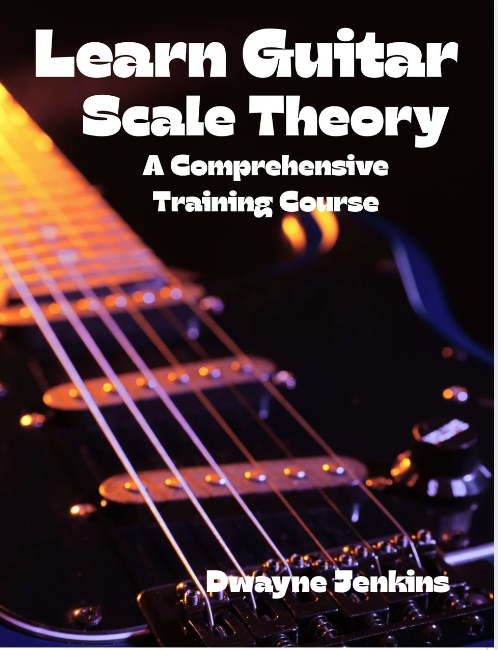
With this comprehensive training course, you'll be able to unlock the mystery of guitar scales and enhance not only your guitar playing but also your mastery of the fretboard. You'll develop a full understanding of the concepts and techniques needed to craft mesmerizing solos. The same techniques are used by those who inspire you to play.
You'll start with the major scale, which is the foundation of all others. You'll learn that by tweaking a few notes, you can create minor scales to expand your knowledge. You'll learn why pentatonic scales are so popular and how you can easily use them too. You'll also discover that by adding the "blue" note, you also enhance your ability to recognize what notes will fit best with certain chords and progressions.
Elevate Your Playing
So if you're serious about elevating your guitar playing to the next level, grab the book (currently on sale) and with diagrams, easy-to-understand notation, and step-by-step instruction, you'll be well on your way. And if you have any questions, feel free to reach out to my website, and I will be happy to help at no additional charge. My way of saying thanks. Good luck with your guitar playing, and grab the book. I know you'll be glad you did.
Sincerely, Dwayne Jenkins