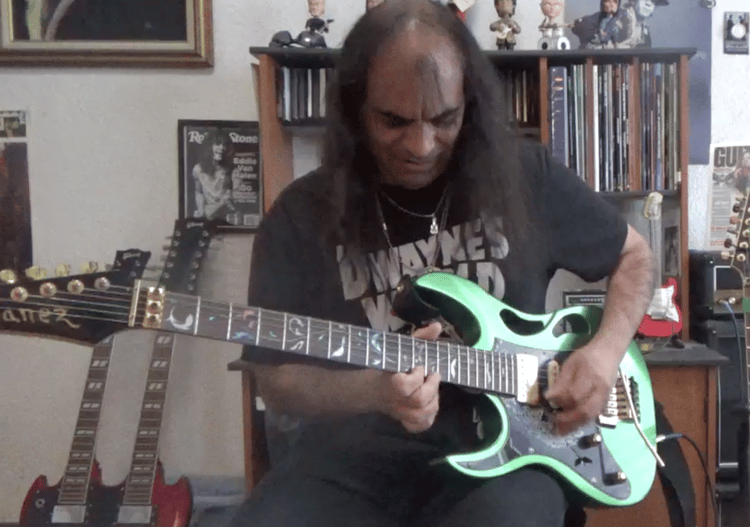
In this lesson, we will reveal the mystery of modes. This will be your guide to unlocking guitar secrets for better sound. Modes are a concept in music that can significantly enhance your guitar playing by adding depth and variety to your sound. They are scales derived from the major scale, each with its own unique mood and character. Understanding modes can seem complex at first, but with a bit of study and daily practice, they can become a powerful tool in your musical arsenal.
The Seven Modes
There are seven modes in Western music, each starting on a different tone degree of the major scale. What makes these unique compared to the pentatonic scales is the whole-step, half-step note formula. With the pentatonic scales, they are in whole steps and steps in half-note intervals. No half steps unless you add the blue note.
This allows you to create musical landscapes that are different from what you can make with the pentatonics because of these note intervals. They also allow you to enhance your understanding of rhythm and mastery of the fretboard.
The Ionian Mode: 1 2 3 4 5 6 7 = W-W-H-W-W-W-H.
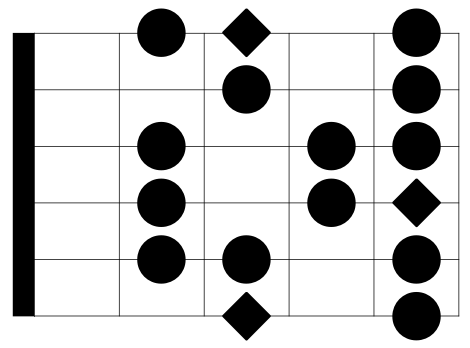
This is essentially the major scale itself. It is the foundation, and it is best to learn first. Look at the note intervals and see where the half-steps come in. Listen to how it creates a bright, happy sound, making it perfect for upbeat, cheerful songs.
The Dorian Mode: 1 2 b3 4 5 6 b7 = W-H-W-W-W-H-W
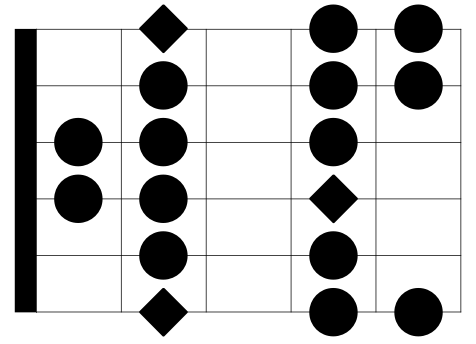
Known for its jazzy and soulful feel, the Dorian mode adds a minor twist to your playing. It's great for blues and jazz genres. Notice how this mode has two flat notes: the flat 3rd and the flat 7th. This indicates that it is a minor mode. That is why it creates its specific sound. It also shows that it works well with minor 7th chords, because these have a flat 3rd and a flat 7th.
The Phrygian Mode: 1 b2 b3 4 5 b6 b7 = H-W-W-W-H-W-W
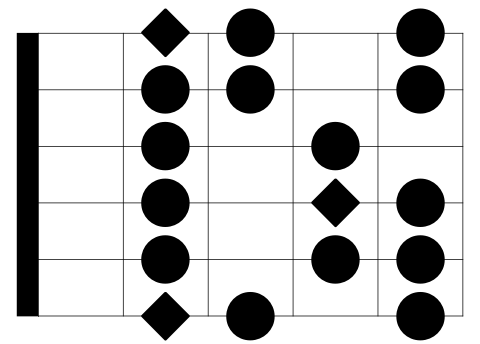
This is a unique mode with a Spanish or Middle Eastern flavor. This mode is often used in flamenco music and can add an exotic flair to your sound. Notice also that this mode not only has the flat 3rd and 7th notes but also the flat 2nd and 6th. This also makes it a minor mode, but it has a different characteristic tone than the Dorian due to the additional flat notes.
The Lydian Mode: 1 2 3 #4 5 6 7 = W-W-W-H-W-W-H
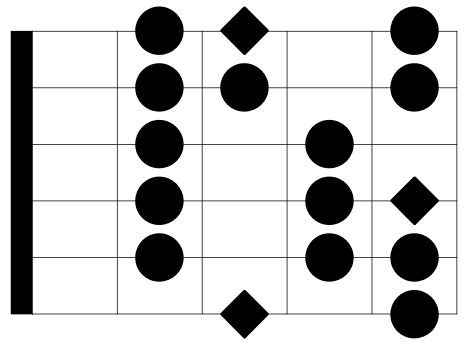
This mode is unique among the six others because it has the sharp 4th note. This gives it a distinctive tone quality as well. It has a dreamy, ethereal quality and is often used in film scores and progressive rock. Also, notice that the 3rd note is not flattened. This indicates that it is a significant mode, like the Ionian, but with a different sound character due to the sharp fourth note.
The Mixolydian Mode: 1 2 3 4 5 6 b7 = W-W-H-W-W-H-W
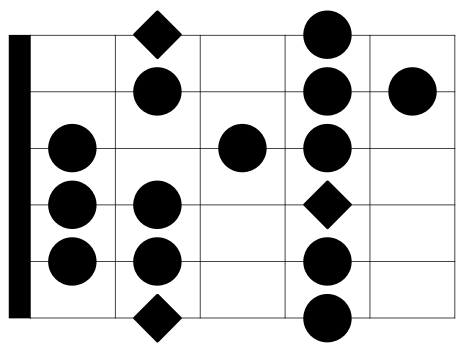
The Mixolydian mode gives a slight bluesy feel, making it a popular staple in rock and blues music. Notice the note intervals and that this mode also does not have a flat third, only a flat 7th. This makes it another primary mode that provides a different sound character than the Ionian and Lydian modes, allowing you to work wth an additional shade of color in your music.
The Aeolian Mode: 1 2 b3 4 5 b6 b7 =W-H-W-W-H-W-W
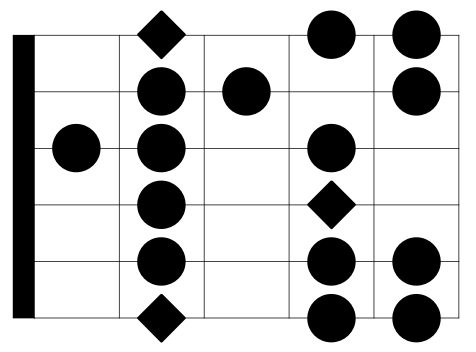
This mode is also known as the natural minor scale. The Aeolian mode is melancholic and is widely used in pop and rock ballads. Notice in this mode that it has the flat 3rd, flat 6th, and flat 7th notes. This indicates that it is minor. Remember, whenever you have a flat 3rd note in any chord mode or scale, it will be a minor and produce a sad, somber sound.
The Locrian Mode: 1 b2 b3 4 b5 b6 b7 = H-W-W-H-W-W-W
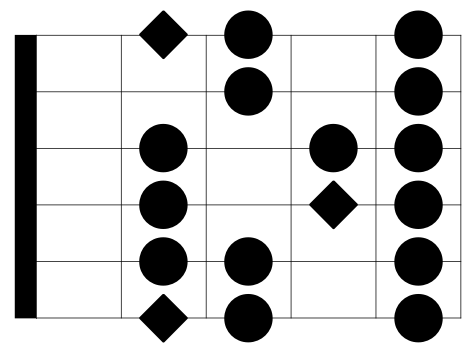
This is the most unusual of the modes. The reason is the flat 5th note that resides in it. The only mode of the seven that has it. This mode has a very unresolved musical character. The Locrian is rarely used on its own due to its unstable sound, but it can add tension and drama when used creatively. Notice that this mode has all flat notes except for the 4th note.
Whole-Step Formulas
When learning the modes, take note not only of the note interval shown in the examples, but also of the whole-step and half-step formulas that vary by mode. It is this that gives them their individual character and allows you to unlock the mysteries of the fretboard.
Like the pentatonics, these always reside in the same order and fall on the tone degrees of the major scale they come out of. By knowing the notes of the key you choose to play in, you expand your playability and musicianship.
Example: C Major = C D E F G A B
A mode will start on each one of these tone degrees. The Ionian on the C note, Dorian on the D note, Phrygian on the E note, etc. This is what you want to master when using the modes. The order they come in and where they are played within the key you are playing in.
So, if you see something referring to the A Dorian, it means that mode is played at that position. Since we know that the Dorian mode is the second mode, we then realize we are playing in the key of G major. That is, of course, if you know the notes that make up the G major scale. G A B C D E F#. Remember, seven notes equal seven modes, one for each tone degree.
Applying Modes to Guitar
To apply modes to your guitar playing, start by learning the different scale patterns for each mode on the fretboard. Practice these patterns in various positions to become comfortable with how they feel and sound. When you do this, you master each mode individually and train your ear to hear the tone character when it is used.
Experimenting with Chord Progressions
Try incorporating different modes into your chord progressions. For example, if you're playing in the key of C major, experiment with the Dorian mode by starting your progression on D minor. This can create new and interesting sounds. Look at the example presented above to see that the Dorian mode in the key of C central falls on the D note. This will be the location in any key you choose to play it in.
Improvisation
Modes are handy for improvisation. By switching between modes, you can change the mood of your solos dramatically. Start by improvising over backing tracks in different modes to get a feel for how each one influences your playing. Make sure to study lead guitar techniques such as hammer-ons, pull-offs, bends, slides, etc. These will allow you to bring the modes to life and get them to sound like music.
Tips for Mastering Modes
- Listen and Learn: Listen to songs that utilize various modes to understand their emotional impact. Try to identify which mode is being used.
- Practice Regularly: Consistent practice is key to mastering modes. Spend time each day working on mode patterns and their applications.
- Record Yourself: Recording your practice sessions can help you hear how modes affect your playing and identify areas for improvement.
Unlock The Mysteries
If you'd like to unlock more of the mysteries of the modes, I recommend you check out the book I authored on the topic. Guitar Modes: Unlock The Secrets.
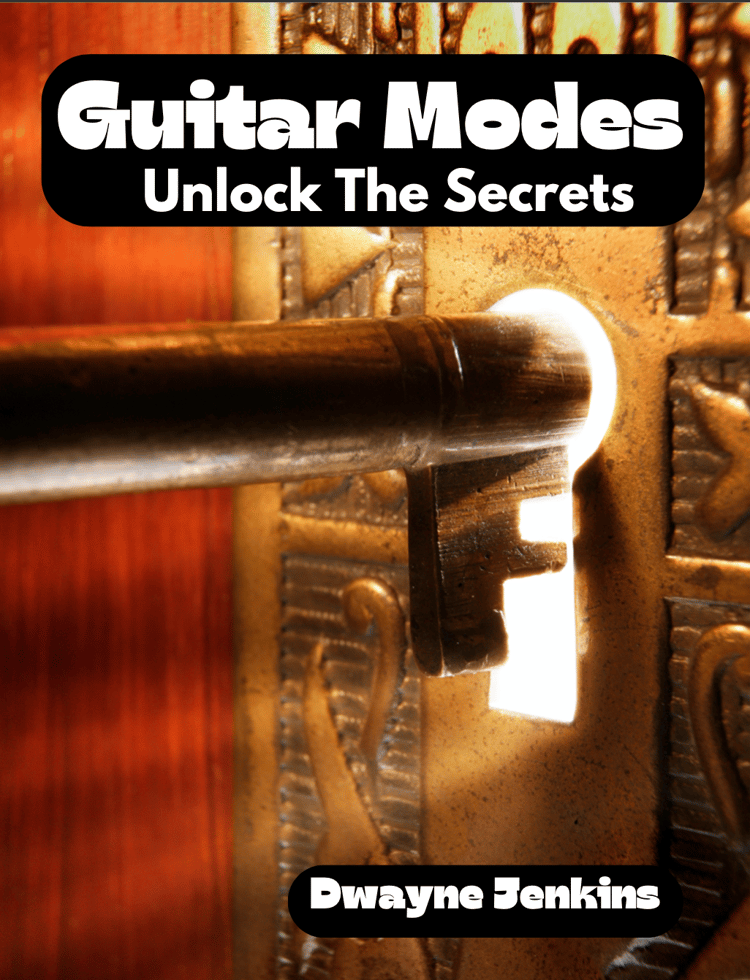
A simple step-by-step system that goes through each mode and shows you how you can use them to elevate your guitar playing today! Once you unlock the mysteries of these magical scales, you will be introduced ot a whole new world you never knew existed.
Understanding and utilizing modes can unlock new creative possibilities in your guitar playing. With study, daily practice, and experimentation, you can enhance your sound and express a wide range of emotions through your music. So, if you are serious about taking your playing to the next level and increasing your musicianship, be sure to grab the book. You'll be glad you did.
Thanks for your time today, and good luck with your playing.
Sincerely, Dwayne Jenkins
Dwayne's Guitar Lessons