In today's lesson, we are going to look at the basic theory behind scales. Understanding guitar scale theory can be a transformative journey for aspiring musicians. Scales form the backbone of music, providing a framework for melody, harmony, and improvisation.
Whether you're a novice or a seasoned player, mastering scale theory will enhance your musical vocabulary and elevate your playing. Let's explore the essentials of guitar scale theory and how you can integrate them into your practice.
What Are Scales?
Scales are sequences of notes ordered by pitch. They serve as the foundation for melodies and harmonies. Each scale has a distinct sound and mood, defined by its unique pattern of intervals—the distance between notes. Learning scales equips you with the tools to understand and create music.
Major and Minor Scales
The two most crucial types of scales in Western music are the major and minor scales.
Major Scales
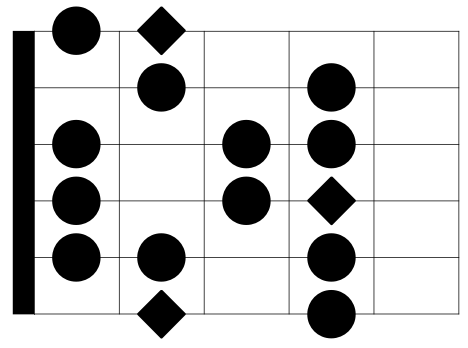
Major scales have a bright, happy sound. They follow a specific pattern of whole (W) and half (H) steps: W-W-H-W-W-W-H. For example, the C major scale consists of the notes C, D, E, F, G, A, and B.
Minor Scales
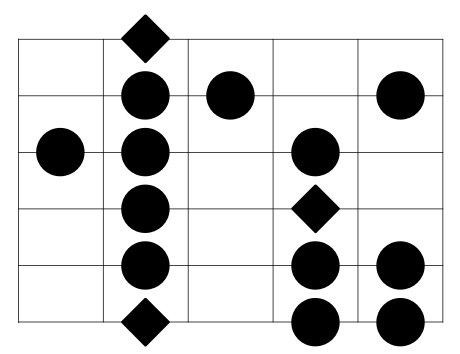
Minor scales, in contrast, have a more somber, introspective quality. The natural minor scale follows this pattern: W-H-W-W-H-W-W. For instance, the A minor scale includes the notes A, B, C, D, E, F, and G. There are also harmonic and melodic minor scales, each with slight variations that add different flavors to the music.
Pentatonic Scales
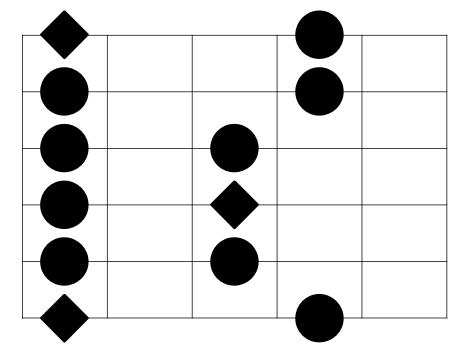
Pentatonic scales are simplified five-note scales that can be major or minor. They are incredibly versatile and often used in blues, rock, and jazz. The minor pentatonic scale, with its pattern of 1, b3, 4, 5, b7 (in the key of A minor: A, C, D, E, G), is particularly popular among guitarists for improvisation.
Modes
Modes are variations of the major scale, each starting on a different note. There are seven modes, each offering its own unique sound and character. Some common modes include:
Ionian (Major)
Dorian (Minor with a raised 6th)
Phrygian (Minor with a flattened 2nd)
Lydian (Major with a raised 4th)
Mixolydian (Major with a flattened 7th)
Understanding modes can open up new creative possibilities, allowing you to add color and depth to your music. Each mode has a certain character, and the goal is to discover them and bring them out in your guitar playing.
Practical Tips for Learning Scales
Start Slow: Begin with one scale at a time, mastering its pattern and sound. Practice slowly to ensure accuracy and proper technique.
Use a Metronome: Timing is crucial in music. Practice scales with a metronome to develop your rhythmic precision.

Apply to Songs: Incorporate scales into songs and solos to see how they work in context. This will help solidify your understanding and make practice more engaging.

Experiment with Improvisation: Use scales as a foundation for improvisation. Experiment with different scales and modes to discover new sounds and ideas.

Learn in Different Positions: Practice scales in various positions along the guitar neck to improve your fretboard familiarity.

Conclusion
Guitar scale theory is an indispensable part of a musician's toolkit. By understanding and mastering scales, you gain the ability to express yourself more fully and creatively on the guitar. Remember, the key is consistent practice and exploration. Let your curiosity guide you as you delve into the rich world of scales, and enjoy the musical journey that unfolds.
Additional Lessons
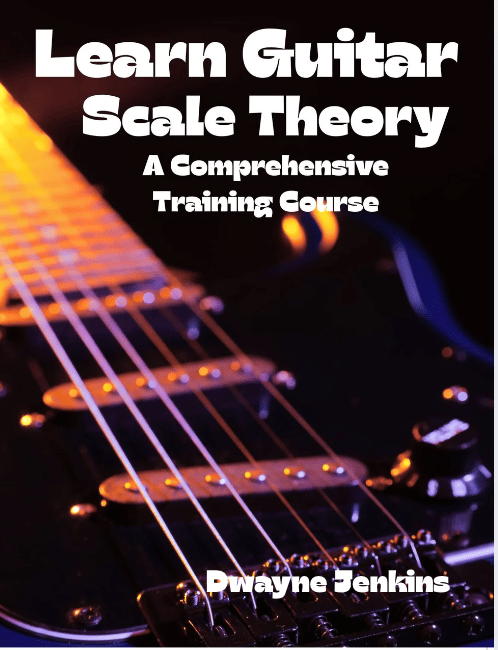
If you're looking to learn more about scale theory, I recommend you check out my book I authored and self-published on the subject. Learn Guitar Scale Theory.
Thanks for your time today, and I hope you feel like you learned a bit more about guitar scales. Be sure to check out the book and try the scales presented in this lesson. They will help increase your vocabulary and your overall musicianship. And if more help is needed, feel free to reach out, and I'll be happy to help.
Sincerely, Dwayne Jenkins