
In this lesson, we are going to demystify the blues scales so that you can easily apply them to your guitar playing. We will look at their structure, techniques for mastering them, and finger-positioning patterns across the fretboard.
Understanding the Basics of the Blues Scale
The blues scale is a staple of guitar playing, renowned for its emotive, soulful sound. It is a variation of the pentatonic scale and is widely used across various genres, especially in blues, rock, and jazz. The blues scale adds a unique flavor, characterized by its distinct "bluesy" notes.
The Structure of the Blues Scale
The blues scale is essentially a six-note scale that builds upon the minor pentatonic scale by adding a "blue" note. This blue note, also known as the flat fifth or diminished fifth, introduces the characteristic tension and release that defines the blues sound.
Minor Pentatonic Scale: 1, ♭3, 4, 5, ♭7
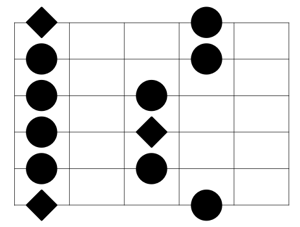
Blues Scale: 1, ♭3, 4, ♭5, 5, ♭7
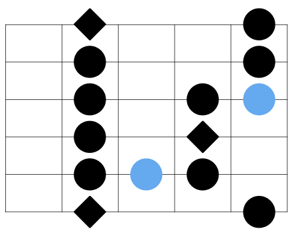
For example, in the key of A, the blues scale would be: A, C, D, D♯, E, G. This scale would be played at the 5th fret because that is where the
Techniques to Master the Blues Scale
Finger Positioning and Patterns
To effectively play the blues scale, it’s crucial to understand the finger positions and patterns on the fretboard. Start by practicing the scale in a single position and gradually expand to different positions along the neck. This will improve your flexibility and allow you to navigate the fretboard with ease.
The 5 Blues Scale Patterns:
Pattern 1: Starts on the 1st note of the scale
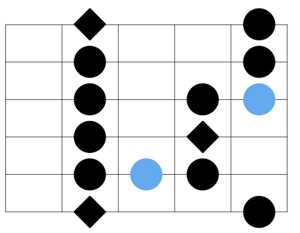
Pattern 2: Starts on the 2nd note of the scale.
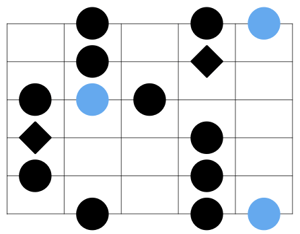
Pattern 3: Starts on the 3rd note of the scale.
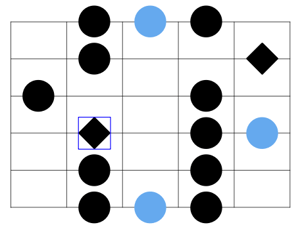
Pattern 4: Starts on the 4th note of the scale.
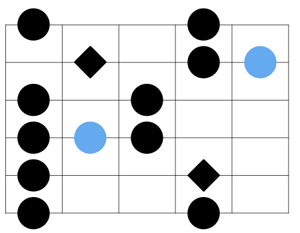
Pattern 5: Starts on the 5th note of the scale.
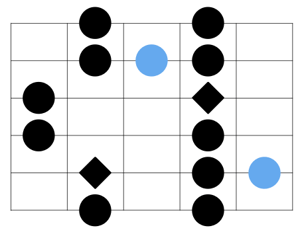
*Remember, the 5 notes of the pentatonic scale equal the 5 scale patterns. One off of each note. When playing the blues scale, you just add the flat 5th note. The location of these notes is highlighted. Master the pentatonic scales first, then master adding the "blue" note in its specified positions.
Incorporating Bends and Slides
The expressive nature of the blues scale comes to life through techniques such as bends and slides. These techniques help you accentuate the blue note and create a more dynamic, emotive sound. Begin by practicing half and full-step bends and incorporating slides between notes to enhance your phrasing.
String Bends
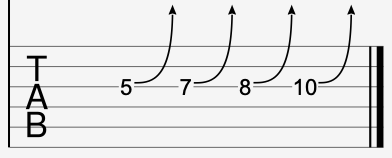
This is an example of string bends at the 5th, 7th, 8th, and 10th frets on the 3rd string.
Slides Up and Down
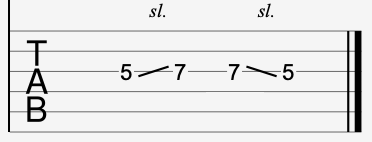
This is an example of slides up and down from the 5th fret to the 7th fret on the 3rd string.
Applying the Blues Scale in Improvisation
Creating Melodic Phrases
Improvisation is at the heart of blues music. Use the blues scale to craft melodic phrases that resonate with emotion and storytelling. Start by experimenting with short, repetitive phrases and gradually build complexity as you become more comfortable.
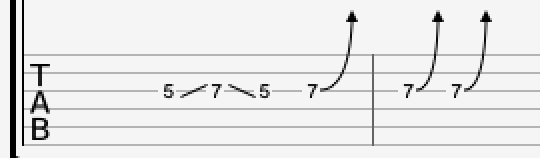
In this example, you slide up and down from the 5th fret to the 7th, and then bend the 7th fret twice. All on the 3rd string.

In this example, you bend at the 19th fret on the 3rd string, and continue playing the 17th fret on the 2nd and 1st strings.
Combining with Other Scales
To add more depth to your playing, try combining the blues scale with other scales, such as the major pentatonic or the Dorian mode. This combination can introduce new textures and create a richer harmonic landscape.
The Major Pentatonic: Alternate to the minor pentatonic scale.
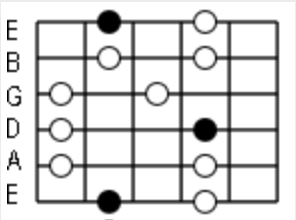
The Dorian Mode: Second mode of the 7 from the major scale.
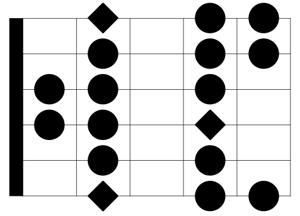
By adding these two scales to your repertoire, you'll increase your mastery over the guitar fretboard.
Tips for Effective Practice
Practice with a Backing Track
Playing along with a backing track will help you develop a better sense of timing and feel. It also provides a context for your improvisation, making it easier to experiment with different ideas and techniques.

Record and Analyze Your Playing
Recording your practice sessions can be incredibly beneficial. It allows you to objectively evaluate your playing, identify areas for improvement, and track your progress over time.

Learn Through a Step-By-Step System
Demystifying and applying the blues scale in guitar playing is not always easy. That is why working with a structured step-by-step system is a great idea. Allowing you to focus on only concepts and techniques that are necessary, and learn them in the proper order. Allowing you to progress at an accelerated rate. Here is one I recommend: Demystifying the Blues Scales.

Conclusion
Through daily study and practice, you will open up a world of creative possibilities that will enhance your guitar playing. By understanding its structure, mastering essential techniques, and practicing thoughtfully, you can harness the expressive power of the blues scale to elevate your guitar playing. Embrace the journey, and let the blues guide you to new musical heights. And if more help is needed, feel free to contact me through my website; I will be happy to help.
Best of luck,
Sincerely, Dwayne
Dwayne's Guitar Lessons.