
Welcome to the captivating world of songwriting! Whether you’re a budding musician or a seasoned composer seeking new inspiration, understanding the elements of rhythms, riffs, solos, and melody lines can elevate your music to extraordinary heights. Let’s explore each component to help you craft unforgettable songs.
#1.) Understanding Rhythms
Rhythms are the backbone of any song, providing structure and movement. A well-crafted rhythm can transform a simple tune into a captivating piece.
Types of Rhythms
- Simple Rhythms: These include basic beats like common time (4/4 time) or waltz time (3/4), ideal for beginners. This type of rhythm indicates 4 or 3 beats per measure.
Four Measures

Common time = four beats per measure 1 2 3 4
Waltz time = three beats per measure 1 2 3
- Complex Rhythms: Incorporate syncopation, polyrhythms, and odd time signatures like 5/4 or 7/8 for more advanced compositions.
Same thing here, 5/4 time = 5 beats per measure 1 2 3 4 5
Now, 7/8, on the other hand, is a bit odd compared to the other 3. This one indicates 7 1/8 notes within a measure. This gives the music a very odd timing to the rhythm. Instead of a 1 2 3 4 in common time, it would be more of a 1 2, 1 2, 1 2 3. See how there are 7 beats instead of the common 4? Try this timing out, and see how it creates an odd timing to the rhythm. A great way to catch attention.
#2.) Tips for Crafting Rhythms
Rhythm is the foundation for all songs. No matter if they are created with chords or melody lines. There must be some type of rhythm that catches people's attention. Developing a full understanding of the following concepts can help you make your rhythms more interesting.
- Start Simple: Begin with a basic beat and gradually add layers. Build your rhythms like using building blocks. This will allow you to see what sounds good in certain emotions that you are trying to convey.
- Experiment with Tempo: Vary the speed to evoke different emotions. This can be a huge attention getter. Varying tempos within certain parts of the music catches the attention of the listener in an effective way if done properly.
- Use Percussion: Incorporate instruments like drums or tambourines to enhance the rhythm. Different instruments can help with crafting emotions within your rhythms. Especially if they are added at the right times in the music.
Crafting Riffs
Riffs are the catchy, repeated phrases that often define a song’s identity. They can be melodic or rhythmic and are usually played on guitar or bass.
Creating Memorable Riffs
- Keep it Simple: A riff doesn’t need to be complex to be effective. Simplicity often leads to memorability. Many songs have simple riffs made up of a few notes. Remember, a riff is a piece of music that usually starts the song and is easily recognizable.
Melody Riff Example

This is a simple riff exercise along the 6th string. Play each note one right after the other.
- Focus on Repetition: Repeating a riff helps engrain it in the listener’s mind. This is also very common in a lot of hit songs. Especially pop and rock. Create something that you can easily repeat. This sets up a hypnotic rhythm that gets imprinted on the listener's brain.
- Experiment with Dynamics: Alter the volume and intensity to add interest. This is another huge element in songwriting. Work on adding loudness and softness in the song. This allows you to take the listener on an emotional journey.
#3.) Mastering Solos
Once you have your rhythms down, you can then look at experimenting with guitar solos. Solos are the icing on the cake. They give you the chance to shine and showcase your technical skills. They add flair and complexity to a composition.
Elements of Great Solos
- Technical Skill: Practice scales and arpeggios to improve your ability. These are the foundations of melody. Chords are what make up the cake, and scales are what make up the frosting. Arpeggiating chords is a great way to enhance chords, and learning scales like the pentatonics is a great way to start creating solos and melody lines.
Chord Arpeggios

This is an arpeggio using the C and G major chords.

This is the minor pentatonic scale. A great place to start with guitar soloing.
- Emotional Expression: Convey emotion through bends, slides, and vibrato. These are the techniques used to express the notes within a scale like the minor pentatonic.
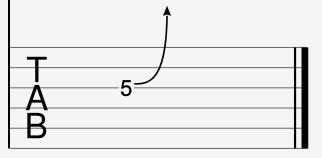
This is an example of a string bend at the 5th fret on the 3rd string.

This is an example of an ascending slide from the 5th fret to the 7th on the 3rd string.

This is an example of vibaro on multiple notes. The 5th, 7th, 8th, and 9th on the 3rd string.
- Structure: Use the techniques to build structure and phrasing to make a musical statement. Begin with a clear theme, build to a climax, and conclude with a strong resolution.
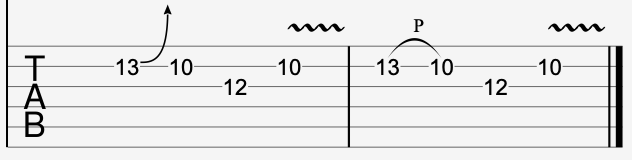
This is an example of putting some of the techniques learned previously together to create structure. Guitar licks and phrasing are the essence of creating melody lines. Study the techniques, practice daily, and before you know it, you'll be making crafting memorable guitar solos.
Solo Writing Tips
- Listen and Adapt: Study solos from different genres to broaden your style. This will give you insight into how techniques like bends and slides are used in context. Giving you ideas for your own solos.
- Improvise: Allow space for spontaneous creativity. This is where you just create something on the spot. Not always an easy thing to do, but with practice and study of the scale patterns, you'll be able to do it with ease.
- Layer with Effects: Use guitar pedals or digital tools to enhance your sound. This is what's great about playing electric guitar: you can use effects pedals that will spark your inspiration, as well as allow you to craft more creative musical landscapes.
#4.) Building Melody Lines
Melody lines are the soul of a song, conveying the core message and emotion. These are also created with mastery over the fretboard. Learning scale patterns along the fretboard will allow you to create melody lines in different positions and in different keys.
Crafting Captivating Melodies
- Use Scales and Modes: Experiment with major, minor, and modal scales for diverse sounds. These will give you a variety of tools to choose from.
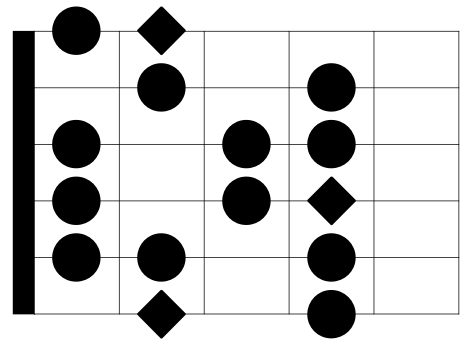
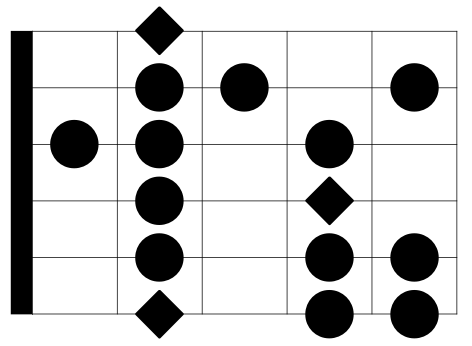
These are examples of the Major and Minor scales. Major first, and the minor second. Notice the similarities as well as the differences between these two scales. With certain note locations being changed in the minor scale, it creates a different sound of emotion than the major scale.
Knowing this allows you to craft the type of emotion that you're looking for. But this only comes through daily study and practice of the scales.
- Create Contrast: Vary pitch and rhythm to maintain listener interest. This will control the emotion of the listener and allow the music to take them where you want them to go.
- Develop a Motif: Establish a recurring theme that evolves throughout the song. This allows the listener an easier way of understanding the message you are trying to convey with your artistic expression.
Melody Writing Techniques
- Sing Your Ideas: Vocalize your thoughts before translating them to an instrument. This can be a very powerful technique to utilize in your composition development. Even if you can't sing, you can hum, and this allows you to make a better connection with the instrument.
- Experiment with Harmony: Harmonize melodies to enrich the texture. This is a great way to "fatten" up the sound. When two or more instruments are playing the same thing together, it creates a wall of sound. This can be done with 3rds, 6ths, and octaves.
Thirds = The 1 (root) and 3rd.
C Major: C D E F G A B, thirds = the C and E notes
Sixths = The 1 (root) and the 6th.
C Major: C D E F G A B, sixths = the C and A notes
Octaves = the 1 (root) and the octave (same note in the next pitch up or down)
C Major: C D E F G A B C, Octave = the C and the next C
- Incorporate Dynamics: Use crescendos, decrescendos, and varied articulation for impact. These will allow you to add depth to your songs as well as control emotion, as I mentioned earlier. Remember, music is about emotion, and great songwriters craft music that controls emotion.
An Art and a Science
Songwriting is both an art and a science, requiring a balance of creativity and technical skill. By mastering rhythms, riffs, solos, and melody lines, you can craft songs that resonate deeply with listeners. Embrace experimentation, draw inspiration from diverse sources, and most importantly, enjoy the process of creating music!
But, just like anything else in life, it will take a bit of study and daily practice to get a full understanding of these concepts. Not just in theory, but to be used in practical application. That being said, let's look at what can be done to dive deeper.
Dive Deeper
If you'd like to dive deeper into the art of scales, I recommend you check out the book I authored on the topic, Learn Guitar Scale Theory.
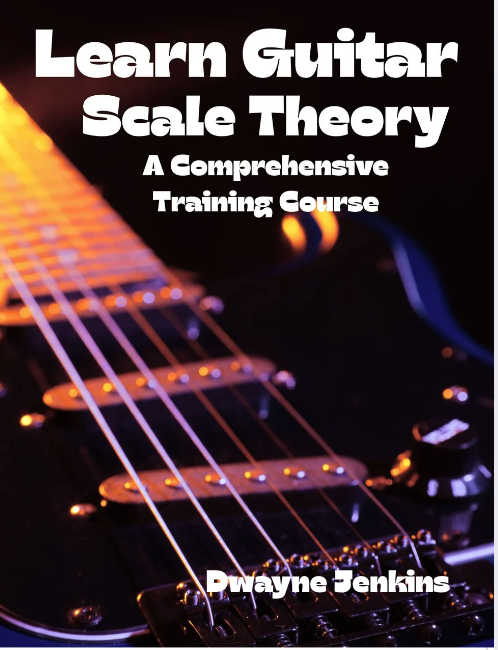
This insightful guide dives into the intricate workings of common guitar scales such as the major scale, minor scales, pentatonic scales, and modes. The book breaks down each scale's construction, providing clear explanations with practical exercises, diagrams, and modern notation.
No matter if you are new to scales and soloing, or have been at it a while and want to get better, this book, currently on sale, offers the tools you need to increase your comprehension and elevate your guitar playing to the next level with a simple step-by-step system that anyone can easily learn from.
Email Support Available
And best of all, if you get stuck on a lesson or have any questions, you can contact me through my website, and I will be happy to assist you Free of charge. My way of saying thank you for supporting my lessons. I hope you learned something today, and you get the book. I know it can help you excel. Best of luck with your guitar playing, and thank you for your time.
Sincerely, Dwayne Jenkins.