
The natural minor scale, the counterpart to the major scale, is a cornerstone in Western music, providing a contrasting emotional palette. While the major scale is often associated with bright and cheerful sounds, the natural minor scale imparts a more somber and introspective quality, making it a valuable tool for expressing a wide range of emotions in music.
Constructing the Natural Minor Scale
The natural minor scale is constructed using a specific sequence of whole and half steps. Just like the major scale, but the interval of notes is different. This pattern gives the scale its unique, melancholic sound. The interval pattern for the natural minor scale is as follows:
W-H-W-W-H-W-W
If you analyze this with the major scale you previously learned, you'll see that the pattern of whole steps is not the same. That is because some of the notes have been altered to make the minor scale. Let's take a look at this in more detail.
A Major: A B C# D E F# G# = 1 2 3 4 5 6 7
A Minor: A B C D E F G = 1 2 b3 4 5 b6 b7
Notice how we flattened the sharp notes of the major scale to create the minor scale. These notes are located at the 3rd, 6th, and 7th positions in the scale. So, we can concur that we flatten the 3rd, 6th, and 7th notes of the major scale, and we have the natural minor scale.
Make sense?
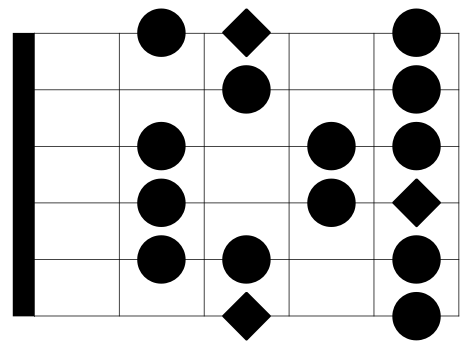
This goes for any major scale. No matter if it's A, G, C, etc, flatten the 3rd, 6th, and 7th tone degrees, and you get the natural minor scale. Let's take a look at both scales in more detail
The Major Scale: Otherwise Known As the Ionian Mode
The Minor Scale: Otherwise Known As the Aeolian Mode
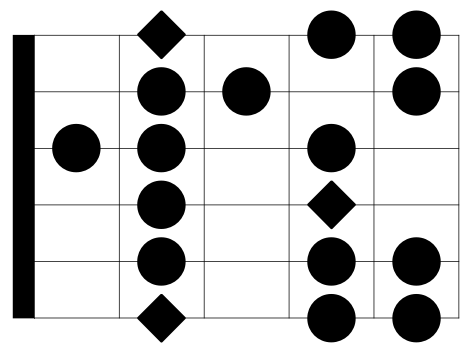
Do you see how these scales can be formed into patterns for easier learning, and that they are shaped differently? It is because of the alteration made to the major scale. If the 12 notes of the musical alphabet are the roots of the musical tree, and the Major scale is the musical tree trunk, then the minor scale would be the first branch.
The A natural minor scale is often used as a reference point for learning other minor scales due to its straightforward construction and lack of sharps or flats.
Practical Application Exercises
- Fretboard Familiarity: Practice the A natural minor scale across different positions on the fretboard. Begin with the position at the 5th fret (the A note) and gradually move to higher and lower positions. This will help you to improve your musicianship.
- Interval Recognition: As you play the scale, focus on the intervals between each note. Notice the tonal quality between the notes. This will deepen your understanding of the scale's construction and how you may further use it.
- Ear Training: Hum along with the notes as you play them to internalize the sound of the A natural minor scale. This will improve your ability to recognize it by ear and give you mastery over the fretboard.
Significance of the Natural Minor Scale
The natural minor scale is essential for guitarists due to its versatility and emotional range. It is commonly used in various musical genres, including rock, blues, classical, and folk music. By mastering the natural minor scale, you gain the ability to explore more complex musical ideas and convey deeper emotions through your playing.
Additional Practical Exercises
- Scale Practice: Play the A natural minor scale up and down the fretboard, ensuring each note is clear and even.
- Improvisation: Use the natural minor scale to create simple melodies or solos over a minor chord progression. This will enhance your ability to express emotions musically.
- Composition: Write a short piece of music using the natural minor scale. Experiment with different rhythms and phrasings to capture its melancholic essence.
By understanding and practicing the natural minor scale, you'll expand your musical vocabulary and enrich your guitar playing, equipping yourself with the tools to explore new creative possibilities.
The Harmonic and Melodic Minor Scales
The harmonic minor scale is unique and captivating in Western music, celebrated for its exotic and dramatic sound. It is particularly popular in classical, jazz, and metal genres, where its distinctive tone adds depth and intensity to compositions. Understanding the harmonic minor scale involves exploring its construction and recognizing how its differences from the natural minor scale can be used to create compelling musical expressions.
With the Harmonic minor scale, you flatten only the 3rd and 6th notes, and leave the 7th natural. What this does is it creates a whole step and a half between the 6th and 7th tone degrees, giving his scale a very unique sound.
A Major: A B C# D E F# G#
A Minor: A B C D E F G
A Harmonic Minor: A B C D E F# G
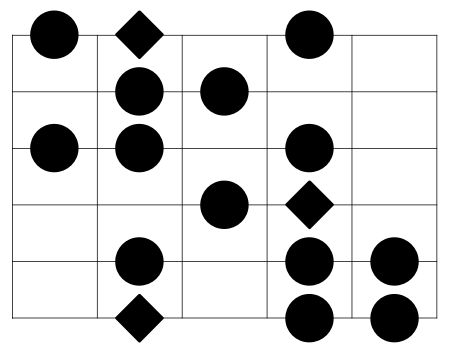
Compare this scale to the natural minor scale, and you'll see how it is very similar; we just didn't flatten the 7th note. We have kept it in its natural position, a half step from the root. It is this one little alteration to the scale that makes it so unique.
The Melodic Minor Scale
The melodic minor scale is constructed by flattening only the 3rd note, and keeping the 6th and 7th notes in their natural position. This alteration gives the scale a brighter and more fluid sound than the harmonic minor scale. Let's take a closer look.
A Major: A B C# D E F# G#
A Minor: A B C D E F G A
Melodic Minor: A B C D E F# G#
As you can see, we just flatten the 3rd note and not the 6th like in the harmonic, and not the 6th and 7th like in the natural minor. Now we have three different minor scales that we can choose from. The natural minor scale, the harmonic minor scale, and the melodic minor scale.
color.
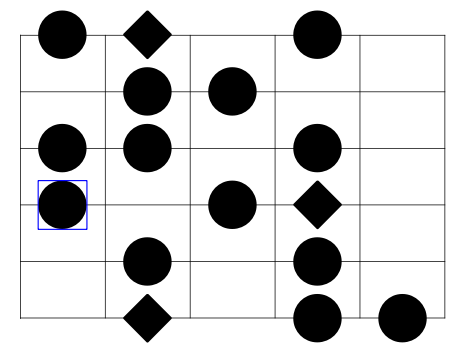
As before, compare this scale to the natural minor. You'll see that you have only flattened the 3rd note, and left the 6th and 7th where they are naturally. Giving you a slightly different shade of color. If you look at these as tree branches, as I mentioned earlier about the musical tree, you now have three. The natural minor, the harmonic minor, and now the melodic minor.
Or, if you'd like to look at them in colors, you could say you have three different shades of the same color. If the color was blue, for example, you'd possibly have navy blue, coral blue, and sky blue. All blue colors, but different shades, produce a different type of emotion. This is the true magic of music. Being able to choose the right color to produce the right emotion at the right time within a composition.
Significance of the Melodic Minor Scale
The melodic minor scale is particularly valued for its versatility and unique tonal quality. It is widely used in jazz, classical, and progressive music due to its ability to produce smooth, lyrical melodies. By mastering the melodic minor scale, you enhance your ability to navigate complex harmonic structures and express a broader range of emotions in your music.
Lesson Conclusion
Now, let's do a quick review of the scales learned in this lesson.
A Major: A B C# D E F# G#
Flatten the 3rd, 6th, and 7th notes, and we get the natural minor scale.
A Minor: A B C D E F G
Flatten just the 3rd and 6th, and we get the harmonic minor scale.
A Harmonic Minor: A B C D E F G#.
Flatten just the 3rd note, and we get the melodic minor scale.
A Melodic minor: A B C D E F# G#.
Four different scales to choose from. One major and three minors. Simple and easy to create. Remember, this concept works with all major scales. Just think of the possibilities you can do with this insight. Be sure to practice the exercises given earlier in the lesson with all the scales.
By understanding and practicing these minor scales, you'll expand your musical vocabulary and enrich your guitar playing, equipping yourself with the tools to explore new creative possibilities, as well as play more complex compositions. Learn To Play Lead Guitar is a comprehensive training guide that will teach you how to set your fretboard on fire! Playing lead guitar is fun, and with the right training, you could be doing it in no time.
Dive Deeper:
If you'd like to dive deeper into scales, I recommend you check out my book I authored and published called Learn To Play Lead Guitar.

Learn To Play Lead Guitar is a comprehensive training guide that offers everything you need to know to have fun playing jaw-dropping guitar solos. With diagrams, simple notation, learning assessments, and training exercises to help you excel quickly. All in a step-by-step method that anyone can learn from.
Playing lead guitar is fun, and with the right training, you could be doing it in no time. Of course, you need the desire to learn. But if you have that, you're already halfway there. Just grab the book, set some time aside to practice daily, and before you know it, you'll be creating sounds with your guitar that you never thought possible. You'll have people turning their heads and saying, "What was that?"
Availability
And, if you need any help with any of the lessons, just contact me and I will be happy to help. The book is available on my website in digital format, and can also be found in physical format on Amazon, Barnes & Noble, and wherever books are sold.
Thank you for your time today. I know if you go through this lesson and put its ideas into practical application, you will see your guitar playing soar to new heights. If you have any questions, feel free to contact me at your earliest convenience. Best of luck, and take care.
Sincerely, Dwayne Jenkins