
In this lesson, we will learn how to improvise with guitar scales and unleash your creative potential. Improvisation is a vital skill for any aspiring guitarist. It allows you to express yourself, explore new sounds, and enhance your musical creativity.
One of the most effective ways to improve your improvisation skills is by mastering guitar scales. This lesson will guide you through the process of improvising with guitar scales, helping you unlock your creative potential.
Understanding Guitar Scales
Guitar scales are a series of notes played in a specific sequence. They form the foundation of melodies and solos, acting as a roadmap for improvisation. Understanding the structure of scales will provide you with the tools necessary to create your own music.
Common Guitar Scales:
- Major Scale: Bright and happy, it's the most commonly used scale in Western music. It is made up of 7 notes and serves as the foundation for chord construction, harmony, melody, and music theory.
C Major Scale: C D E F G A B = 1 2 3 4 5 6 7
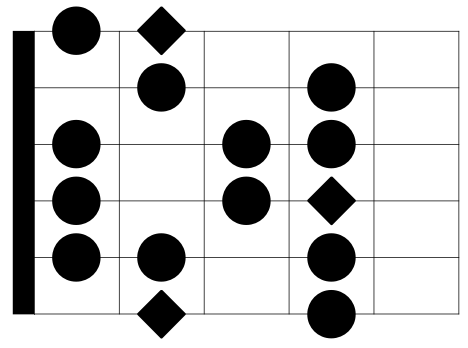
This is the major scale pattern. It can be played anywhere along the fretboard. Perfect for improvising over any major chord progression. If you were to play this at the 8th on the 6th string, you would be playing the C major scale. Why? Because that is where the C note resides on that string.
- Minor Scale: This is where you flatten the 3rd, 6th, and 7th tone degrees of the major scale, creating a darker and more emotional sound. Perfect for evoking deeper feelings.
A Major: A B C# D E F G = 1 2 3 4 5 6 7
A Minor: A B C D E F G = 1 2 b3 4 5 b6 b7
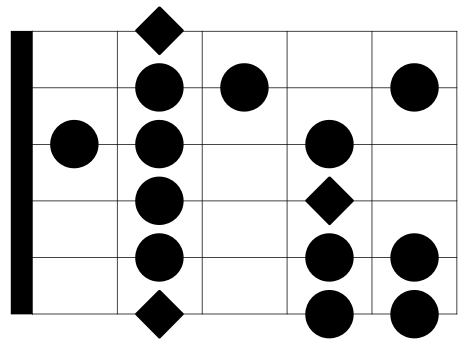
Can you see how by flattening the 3rd, 6th, and 7th tone degrees of the A major scale, we created the A minor scale? This creates an alternative to the major scale. Providing a different type of emotion.
In addition to that, we can easily create two other minor variations of the major scale. The harmonic minor and the melodic minor.
The harmonic Minor Scale
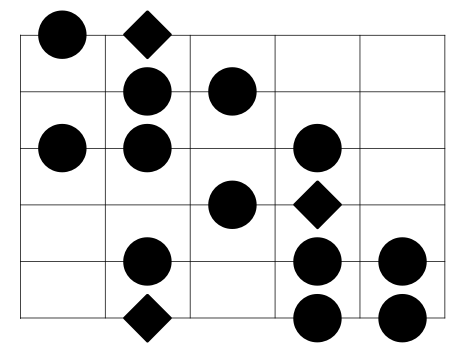
With this minor scale, you just flatten the 3rd and the 6th tone degrees, and leave the 7th natural. Let's take a look at this in more detail.
A Major: A B C# D E F# G# = 1 2 3 4 5 6 7
A minor: A B C D E F G = 1 2 b3 4 5 b6 b7
A Harmonic Minor: A B C D E F G# = 1 2 b3 4 5 b6 7
Can you see how we left the 7th note in its natural position? This allows us to create a variation of the natural minor. Giving us a different shade of color to paint with.
The Melodic Minor
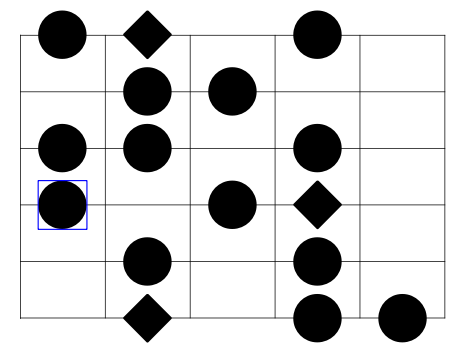
In this scale, we will just flatten the 3rd tone degree, and leave the 6th and 7th natural. This will give us one more shade of color to work with. Let's take a closer look.
A Major: A B C# D E F# G# = 1 2 3 4 5 6 7
A Minor: A B C D E F G = 1 2 b3 4 5 b6 b7
A Melodic Minor: A B C D E F# G# = 1 2 b3 4 5 6 7
Notice how this scale only has the flattened 3rd note. This gives it a different type of emotion than the natural minor and the harmonic minor. Ultimately, it gives you more to work with.
- Pentatonic Scale: A simplified five-note scale that is taken from the major and natural minor. Widely used in playing riffs, solos, and melody lines. Very popular in many styles of music.
C Major: C D E F G A B = 1 2 3 4 5 6 7
C Major Pentatonic: C D E G A = 1 2 3 5 6
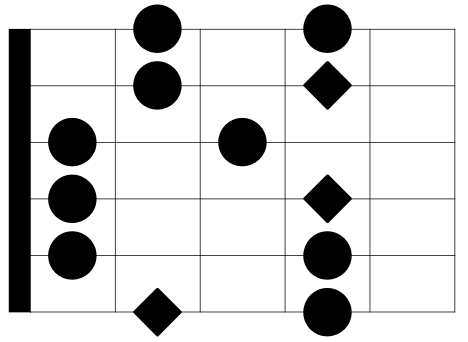
The major pentatonic scale eliminates the 4th and 6th notes of the major scale, making it an easier scale to work with and very popular. Below is an example of the minor pentatonic scale.
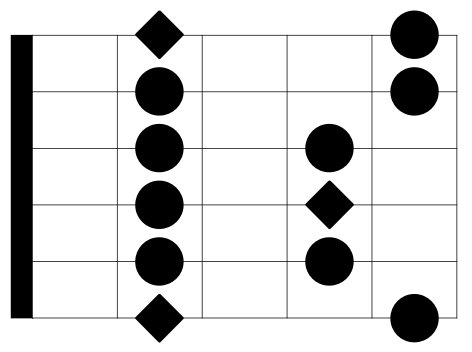
A Minor: A B C D E F G = 1 2 b3 4 5 b6 b7
A Minor Pentatonic: A C D E G = 1 b3 4 5 b7
Remember, the major pentatonic eliminates the 4th and 7th notes of the major, and the minor pentatonic eliminates the 2nd and 6th notes of the minor. This gives you two more scales to work with.
- Blues Scale: This is an extension of the pentatonic scale. By adding the flat 3rd note to the major pentatonic, or the flat 5th note to the minor, you create a simple scale with a bluesy twist.
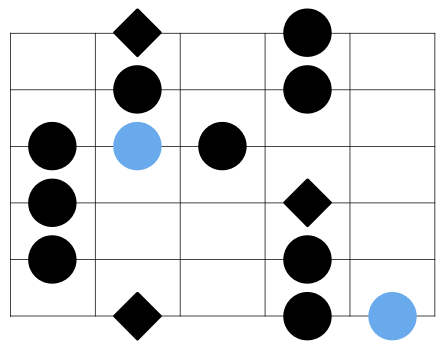

C major Pentatonic: C D E G A = 1 2 3 5 6
C Major Blues Scale: C D Eb E G A = 1 2 b3 3 5 6
A Minor Pentatonic: A C D E G = 1 b3 4 5 b7
A minor Blues Scale: A C D Eb E G = 1 b3 4 b5 5 b7
Notice how these two scales utilize the same note (Eb), but it is in a different position within each scale. It resides at the 3rd position in the major blues and resides in the 5th position in the minor blues. Also, see how they extend the pentatonics.
Learning the Basics
Before diving into improvisation, it's essential to familiarize yourself with the basic scales. Start by learning the finger positions and practicing them until you can play them fluently.

Tips for Learning Scales:
- Practice Slowly: Focus on accuracy and clean notes.
- Use a Metronome: Helps maintain a steady rhythm.
- Visualize the Fretboard: Understand how scales fit across the guitar neck.
Techniques for Improvisation
Once you're comfortable with the basic scales, it's time to explore improvisation techniques. Here's how you can start improvising with confidence:
1. Phrasing
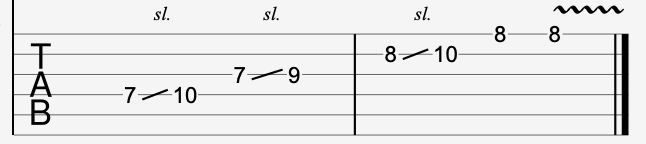
Think of your improvisation as a conversation. Use phrasing to create musical sentences. Experiment with different note lengths, rests, and dynamics to add expression to your playing.
2. Bending and Vibrato
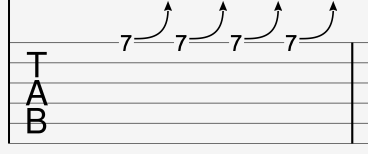

These techniques add emotion and character to your improvisation. Bending involves pushing or pulling a string to change the pitch, while vibrato adds a quivering effect to a sustained note.
3. Hammer-Ons and Pull-Offs
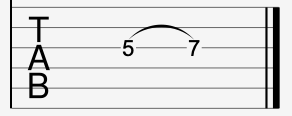

These techniques allow for smoother transitions between notes. A hammer-on is played by striking the string with a finger, while a pull-off involves plucking the string by lifting a finger off the fretboard.
4. Exploring Different Scales
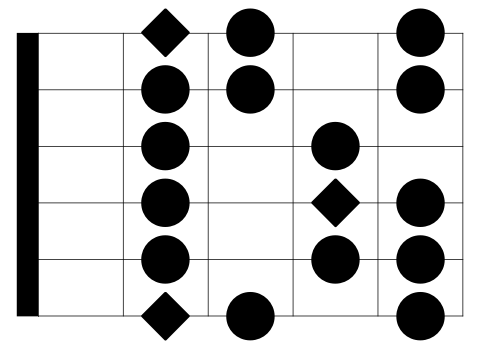
Don't limit yourself to one scale. Mix and match different scales to create unique sounds. For instance, learn the modes and use them for a richer musical texture. The scale pattern above is the Phrygian mode. Compare it to the other scales you learned.
Developing Your Own Style
Improvisation is an opportunity to develop your own musical voice. Here are some tips to help you find your unique style:

- Listen to Different Genres: Draw inspiration from various music styles.
- Jam with Other Musicians: Learn from others and exchange ideas.
- Record Your Sessions: Review your improvisations to identify strengths and areas for improvement.
Practice Routine
To improve your improvisation skills, establish a consistent practice routine. Dedicate at least 30 minutes a day to practicing scales and improvisation techniques. Over time, you'll notice a significant improvement in your creativity and confidence.
Practice Routine Example:
- Warm-up exercises
- Major & minor Scales
- Pentatonic scales
- Speed drills
- Scale theory
Additional Thoughts
Improvising with guitar scales is a fantastic way to unlock your creative potential and expand your musical horizons. By mastering scales, experimenting with techniques, and developing your own style, you'll become a more versatile and expressive guitarist. Remember, the key to successful improvisation lies in continuous practice and exploration. So grab your guitar and start improvising today!
Diving Deeper Into Improvisation
Once you get a handle on the basics, as in this lesson, you can dive deeper into unlocking your true potential. There are many wonderful gems in the scales, but they can only be discovered through daily study and practice of them. That is why I recommend a good training guide.
It can help you to learn faster and avoid making mistakes and wasting time. That is why I've authored a few of these for this specific purpose. I know when I was learning, way before the internet, method books helped me out tremendously. So, I've authored a few of my own.
The one I recommend getting started with is How To Play Guitar Solos.

This is a great book to learn how to use scales and develop your lead guitar playing. You'll learn about what scales to play, where to play them, when in a song it would be to play them, and a comprehensive understanding of why they work the way they do. You'll learn how to read notation for the modern guitarist with diagrams and examples of concepts and techniques associated with lead guitar playing.
Designed in a simple step-by-step format that anyone can learn from. Even if you have no previous music training, you can learn this. No matter if you're just getting started or have been playing for years and looking to take your guitar playing to the next level, this book will get you there. Currently on sale and available today. Get the book now, and see where your passion takes you tomorrow.
Free Support
And the best part is that it comes with free email support from me. So, if you have any questions or get stuck on a lesson, I'm here to help. You'll become a sure-fire success. Before you know it, you'll be creating jaw-dropping guitar solos! So grab it today, and see where your passion takes you. Thanks for your tie today, and good luck with your guitar playing.
Sincerely, Dwayne Jenkins