
In today's lesson, we will look at how proper strumming can lead to rhythm guitar mastery. The rhythm guitarist is a fundamental player of any band, providing the foundation and backbone of the music with harmony and structure. As you embark on your journey from a novice strummer to a master of rhythm, you'll explore the nuances that transform basic chords into captivating musical patterns.

Understanding the Basics
Before diving into advanced techniques, it's crucial to have a solid grasp of the basics. These will allow you to develop a solid musical foundation. Here are some key elements to focus on:
Chords and Strumming Patterns
- Open Chords: Start with simple open chords like G, C, D, E, and A. These are essential building blocks for countless songs.
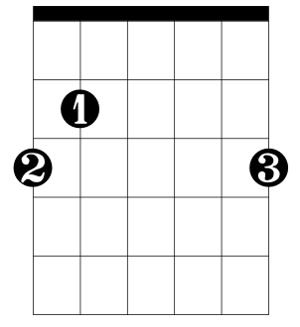
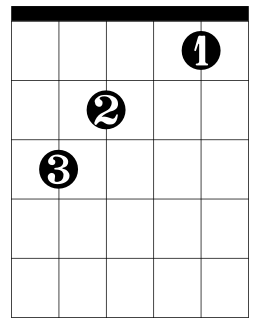
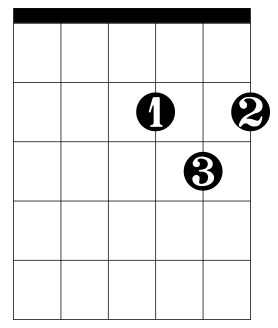


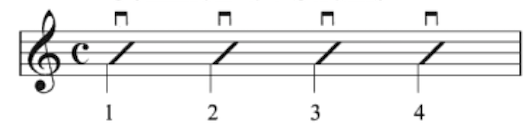
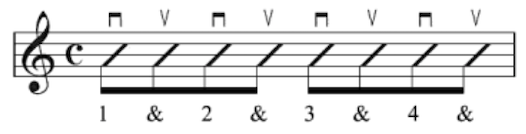
- Strumming Patterns: Practice common strumming patterns, such as downstrokes, upstrokes, and combinations. Mastering these will help you maintain a steady rhythm.
Timing and Tempo
- Metronome Practice: Use a metronome to develop a sense of timing. This is an essential tool that can work wonders for your guitar playing. It can help with not just timing, but also with mastering rhythm. Start slowly and gradually increase your speed as you become more comfortable. This will allow you to build self-confidence as you improve over time.

- Counting Beats: Learn to count beats in various time signatures, such as 4/4 and 3/4, to help you stay in sync with the music. Remember, music is built on measures, or bars, and each bar or measure has a certain number of beats. The most common is 4 beats per measure. Start with this, then explore other timing sequences. 2/4. 3/4, etc.
Developing Your Technique
As you become more comfortable with the basics, you'll refine your technique and explore more complex aspects of rhythm guitar. Be sure to spend time on the fundamentals. You know, the 1 + 1 = 2. The more you master the basics and develop the fundamentals, the easier it will be to play more complex musical pieces. But you must spend time developing the basics.
Syncopation and Accents
- Syncopation: Experiment with syncopated rhythms, which emphasize offbeats or unexpected beats. This adds interest and complexity to your playing.
In a syncopated rhythm, the timing is different. Instead of a: 1 2 3 4, you might have a: 1 and 2 3 4.
Or you might have: 1, 2, and 3; 4. Or maybe something like: 1, 2, 3, and 4, and. All these examples will provide a slightly different rhythm. These allow you to approach the listener at a different angle.
- Accents: Practice accenting specific beats within a measure to create dynamic contrast and energy. This can be done using the examples from the previous section on syncopation. Accenting specific beats also captures the listenerdifferentlyy. Such as a waltz. 1 2 3, with the accent on the 1. This gives the rhythm a catchy feel.
Palm Muting and Percussive Elements
- Palm Muting: This is where you place the palm of your picking hand on the guitar's bridge to mute the strings, producing a slightly more percussive sound. Learn to mute the strings with your palm to create a chugging sound. This is what gives rock and heavy metal their sound. Listen for this technique in these musical styles.

- Percussive Strumming: Incorporate percussive elements by slapping the strings or the body of the guitar for a rhythmic, drum-like effect. This technique can give you alternative sounds to catch the listener's attention and create different rhythms. This can be heard in music styles like jazz and funk.
Enhancing Musicality
To truly master rhythm guitar, it's essential to develop your musicality and adaptability across different styles and genres. By studying different genres, you gain insight into how they approach the instrument.
Exploring Different Genres
- Blues: Study the 12-bar blues progression and shuffle rhythms to capture the essence of blues music. These types of rhythms are essential in the blues. Usually, three chords are played over twelve bars of music. The rhythm is created using the syncopated timing talked about earlier in this lesson.
- Funk: Focus on tight, syncopated rhythms and learn to incorporate "chicken scratch" techniques for a funky feel. Listen to funk music and notice this technique in the rhythm. Funk music uses odd time signatures to create its distinctive sound. Notice how it affects the song's overall sound.
- Reggae: Try the distinctive off-beat strumming pattern known as the "skank" to bring a reggae vibe to your playing. This is another type of music that captures your attention with its different time signatures. Listen to how the beats and rhythm catch you when you listen to it, and then try to add some of these elements into your songwriting.
Improvisation and Creativity
- Chord Variations: Experiment with different chord voicings and inversions to add variety and interest to your rhythm playing. The more you know about guitar chords and how to embellish and invert them, the better you'll be at playing rhythm and gaining mastery over the fretboard.
D Major: D E F# G A B C#
D Major Chord: 1 3 5 = D F# A
D Minor Chord: 1 flat 3 5 = D F A
DSus2: 1 2 5 = D E A
DSus4: 1 4 5 = D G A
Notice how moving or adding a note creates a new chord. This is chord theory, and an essential element for a solid rhythm guitarist to master. Especially if you're going to play in different musical styles, this is where knowing your notes along the fretboard comes in handy. The more you study and practice this concept, the more you'll enhance your rhythm guitar playing, musical understanding, and write more interesting compositions.
- Jam Sessions: Join jam sessions or play along with backing tracks to develop your improvisational skills and react to other musicians. These can be a lot of fun and very beneficial to your development as a guitarist. By listening to different instruments, you get to develop the skill of where you belong in a musical ensemble. You train your ear to hear better as well, and spark ideas that you might not have had otherwise.
Dive Deeper into Rhythm Guitar
If you'd like to dive deeper into mastering rhythm and take your guitar playing to the next level, I recommend checking out my book, Learn to Play Rhythm Guitar.
A simple step-by-step training course with diagrams, notation, exercises, and learning assessments. Allowing you to progress at your own speed and in your own time. Just take it step by step, and before you know it, you'll be playing at a whole new level. The book is available on Amazon, where all books are sold, in both paperback and digital formats.
Mastering rhythm guitar is a rewarding journey that requires dedication, practice, and a willingness to explore new ideas. By building a strong foundation, refining your technique, and enhancing your musicality, you will transform from a simple strummer to a true rhythm guitar alchemist. Embrace the path, and let your rhythm guitar skills shine.
And if you need additional help or have any questions, feel free to let me know. I'm always happy to help. Best of luck, and until next time, take care.
Sincerely, Dwayne Jenkins