
In today's lesson, we are going to learn how to elevate your playing: The role of guitar theory in developing musicality. Guitarists often find themselves at a crossroads: should they delve into the world of music theory or rely solely on their intuitive playing skills?
The answer, as many seasoned musicians will attest, lies in a balanced approach. Guitar theory provides a foundation that can elevate your playing and enhance your musicality, offering new dimensions to your artistic expression.
Understanding Guitar Theory
Guitar theory is the study of musical concepts and how they apply specifically to the guitar. It includes topics such as scales, chords, intervals, and rhythm. For budding guitarists, theory can seem daunting, but it is an essential tool that offers numerous benefits:
- Increased Understanding: By grasping the fundamentals of theory, you can better understand the structure and composition of music. Remember, theory is the foundation of all music. Knowing the notes and their relationships with one another is what allows one to create better with them.
- Improved Technique: Theory helps in developing precision and fluency, allowing you to tackle more complex pieces with confidence. When you fully understand the tools of the trade and how to get the most out of them, you can utilize them to their maximum efficiency.
- Enhanced Creativity: With theory, you can experiment with different scales and chord progressions to create unique sounds and compositions. This allows you to expand and diversify your creativity for more enhanced musical landscapes.
The Benefits of Guitar Theory
1. Building a Strong Foundation
Understanding theory is akin to learning the grammar of a language. It equips you with the necessary skills to construct coherent and compelling musical sentences. By mastering the basics, such as scales and chord structures, you gain the ability to play and recognize a wide range of music styles.
2. Facilitating Communication
In band settings or collaborations, a grounding in guitar theory enables you to communicate effectively with other musicians. It allows you to discuss ideas using a common vocabulary, making rehearsals more productive and enjoyable.
3. Unlocking Musical Potential
Theory opens doors to new possibilities. Instead of sticking to familiar patterns, you learn to explore different genres and styles. This exploration can help you discover your unique musical voice and enhance your improvisational skills.
4. Demystifying the Fretboard
Many guitarists view the fretboard as a puzzle. Guitar theory acts as a roadmap, helping you navigate the fretboard with ease. Understanding the relationships between notes and chords allows for more fluid movement across the neck.
Applying Guitar Theory to Your Practice
Start Small
For beginners, it’s essential to start with the basics. Focus on learning major and minor scales, as well as simple chord progressions. Gradually introduce more complex concepts, such as modes and arpeggios.
The Major Scale: 1 2 3 4 5 6 7
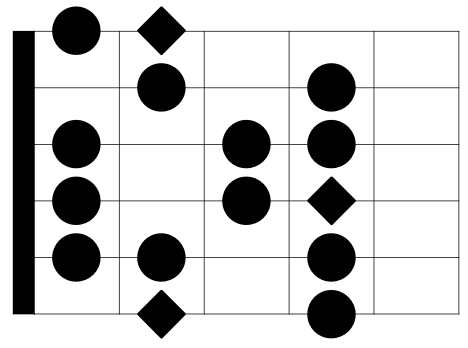
The Minor Scale: 1 2 b3 4 5 b6 b7

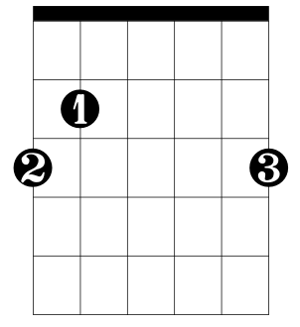
Simple Chord Progression: G major, C major, and D major


Phrygian Mode: 1 b2 b3 4 5 b6 b7

Basic Chords Arpeggios:



Consistency is Key
Incorporate theory into your daily practice routine. Spend a few minutes each day working on scales or chord exercises. Regular practice helps reinforce what you’ve learned and solidifies your understanding. This will allow it to stick in your mind and build muscle memory faster.
Experiment and Explore
Don’t be afraid to experiment with different musical ideas. Use theory as a tool for exploration rather than a set of rigid rules. Try composing your own pieces or improvising over backing tracks to apply what you’ve learned. Backing tracks are a great way to improve your timing and placement within the music spectrum when playing with other musicians.
Seek Guidance
Consider taking lessons from a qualified guitar teacher who can provide personalized instruction and feedback. Alternatively, there are numerous online resources and communities where you can learn and share knowledge. An approach like this can avoid mistakes and allow you insight into concepts and techniques you didn't think of.
Elevate Your Playing
Incorporating guitar theory into your practice can significantly elevate your playing and improve your musicality. By understanding the principles behind the music, you gain the freedom to express yourself more fully and creatively. Whether you’re a beginner or an experienced player, embracing theory is a step towards unlocking your full potential as a guitarist.
If you'd like to do more to elevate your guitar playing, no matter what you're working on, be sure to check out my guitar method books.

Each guide is super clear, with diagrams, notation, exercises, learning assessments, and step-by-step instructions for quick, easy learning, no need for special skills or advanced knowledge. No matter if you are just getting started, at the intermediate level, or advanced, there is something here for you.
Many students have made progress with these books, and I know that if you are serious about learning and taking your skills to the next level, they will help you too. Just grab one and start at the first step. Before you know it, you'll be on your way to enhancing your musicianship.
Books are in both digital and paperback formats for your convenience. They can be found on my website, on Amazon, and wherever books are sold. So, thank you for your time today. I hope you learned something new, and good luck with your guitar playing. Any questions, feel free to reach out. Take care.
Sincerely, Dwayne Jenkins