
Whether you dream of shredding epic solos or strumming melodic chords, the electric guitar is your gateway to the world of rock. Aspiring rockstars, brace yourselves for a journey that will take you from mere novice to stage-ready sensation. This guide will help you build the essential skills you need to rock out with confidence.
Understanding the Electric Guitar
Before diving into playing, it's crucial to familiarize yourself with the components of an electric guitar. This will allow you to develop a greater appreciation for the instrument you will spend time and effort learning to play.
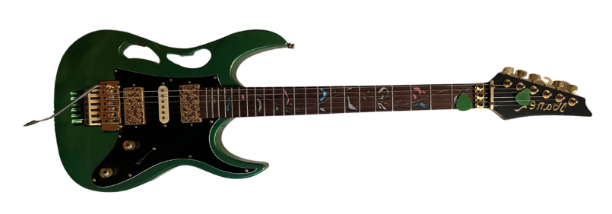
These include:
- Body: The central part of the guitar, which can be solid, semi-hollow, or hollow. Usually, an electric guitar of the type above is solid.
- Neck: The long, thin piece where the fretboard is located. This is where you will place the palm of your fretboard hand to form chords and play scales.
- Strings: Typically six strings, each with a different thickness and pitch. The thickest one will be closest to the ceiling, and the thinnest will be closest to the floor.
- Pickups: Magnetic devices that convert string vibrations into electrical signals. These are what make the electric guitar different from the acoustic, and can provide a variety of tone options.
- Bridge: Supports the strings and affects the guitar's tone and playability. This is also where the picking hand will be positioned over the strings, and where the bridge will be used for palm muting.
- Tuning Pegs: Used to adjust string tension and tune the guitar. These are located on the guitar's headstock and hold the strings in place.
- Fretboard: The front of the neck, where you play chords and single notes. This is divided into sections for more effortless playing and clearer pitch differentiation.
Understanding these components will help you maintain your instrument and achieve the sound you desire. As well as appreciate the guitar for what an innovative, highly crafted instrument it is.
Essential Skills for Aspiring Guitarists
1. Learning Basic Chords
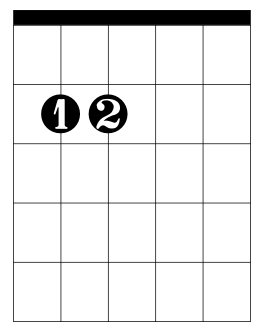
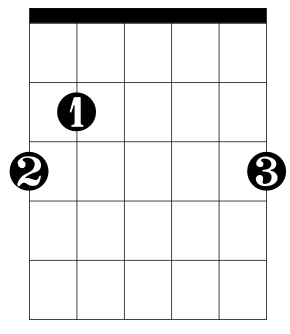
Chords are the foundation of most songs. Begin with open chords such as Am, C, D, Em, and G. Practice smoothly transitioning between them to build muscle memory. Start by moving bewtween two at a time. E minor to A minor is a great place to start. Then proceed to C and G. These five chords are very popular in many songs, and will build the foundation of your chord vocabulary.
2. Mastering the Power Chord
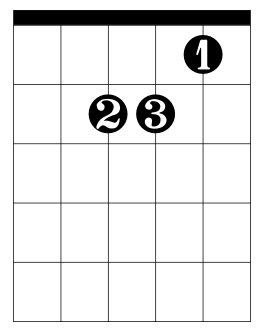
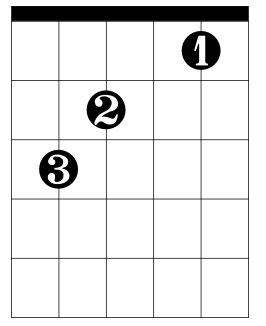
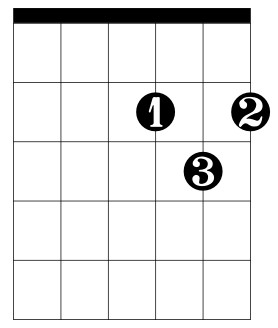
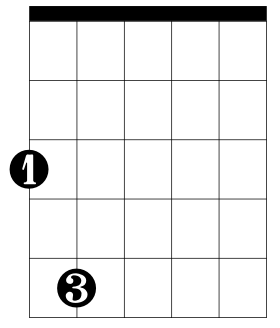
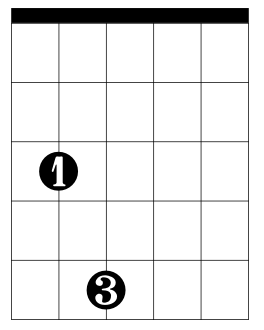
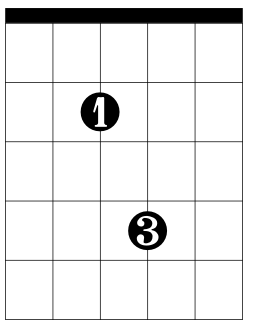
Power chords are a staple in rock music. These two-note chords are versatile and easy to move across the fretboard, making them perfect for beginners looking to play their favorite rock anthems. In the example below, you have the Root 6 G5 power chord, the Root 5 C5 power chords, and the Root 4 E5 power chord.
What is excellent about power chords is that they stay the same shape as you move them. Look at the chord charts below and notice that these three chords are the same shape, just on different strings. Once you learn to form them, work at moving them up and down the fretboard. B
3. Developing Strumming Patterns
Strumming patterns add rhythm and texture to your playing. Start with simple downstrokes and upstrokes, then gradually incorporate more complex patterns. Playing along with your favorite songs can help you internalize different rhythms. These two examples will start you off in the right direction. First, work at strumming each chord downward. I recommend one for each musical section.
Once you have that down, strum down and back up. This will help you develop picking-hand control and allow you to create a different type of rhythm. I also recommend you work with a metronome. This will help you establish proper timing.


4. Experimenting with Fingerpicking
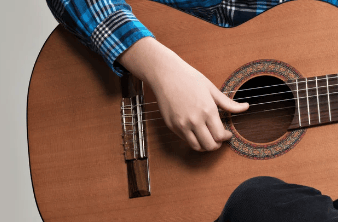
Fingerpicking involves plucking the strings with your fingers instead of a pick. This technique adds a unique sound and can enhance your versatility as a guitarist. Hold a chord, and then pick the strings of the chord individually. This creates a softer tone and allows you to add melody to the chord itself. Do this with multiple chords and listen to how it provides an entirely different emotion than strumming.
Building Technique and Speed
1. Scales and Arpeggios
Scales and arpeggios are essential for developing finger dexterity and speed. Start with the minor pentatonic scale, a favorite among rock guitarists, and practice ascending and descending the fretboard. This is the most popular due to its ease of structure and versatility. I recommend you learn all five patterns. This will allow you to master the fretboard.
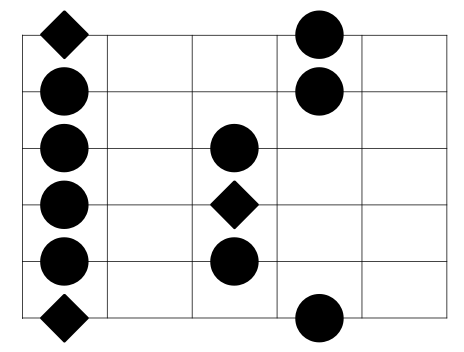
Arpegios are where you play the notes of a chord individually. This technique allows you to expand your playability and enhance your picking hand development. The two examples below use the C and D major as well as the D and A major chords. Start with these and then work your way through other chords that you have learned. Notice how this technique gives you a different sound than strumming.


2. Alternate Picking
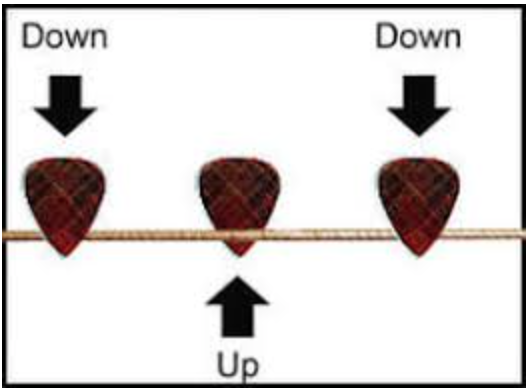
Alternate picking involves alternating between downstrokes and upstrokes. This technique increases your playing speed and accuracy, essential for executing fast solos. This is similar to alternate strumming taught earlier in the lesson. Doing this with individual strings will help with playing guitar riffs, solos, and lead lines.
By mastering this technique, you'll be able to increase your fluidity and relieve stress on your picking hand when playing more complex passages. Or even simple compositions that utilize this technique.
3. Hammer-ons and Pull-offs
These techniques add flair to your playing by allowing for smoother transitions between notes. Practice them to create fluid and expressive solos. A hammer-on is when you pick a note and hammer-on to the next without picking it. verymuch like adding in math. A pull-off is the opposite; you like a note and pull-off to the one behind it, very much like subtracting in math.
Notice in the examples below that the number increases with a hammer-on (adding a note) and decreases with a pull-off (subtracting a note). This is very important to note when reading the notation. Once you get these down individually, work on playing them together.
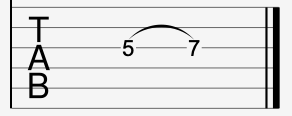
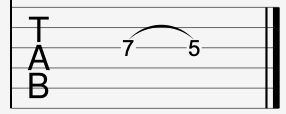
With a hammer-on, one finger is placed down, and another is added without picking it. With the pull-off, two fingers are placed down, you like the note, and pull-off to the one behind it. These two techniques are widely used in guitar playing, so work at getting them down.
Embracing Technology
1. Amplifiers and Effects Pedals
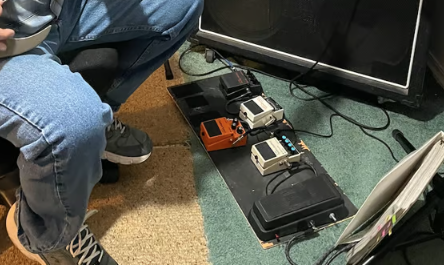
Understanding how to use amplifiers and effects pedals can dramatically alter your sound. You can experiment with distortion, delay, and reverb to find your signature tone. This is the best thing about playing the electric guitar. You are encouraged to create your own signature tone. This can be done through practice and the use of guitar pedals.
Amplifiers and guitar pedals are designed with this purpose in mind. They not only allow you to develop a signature tone, but they also can spark your creativity to explore new musical landscapes. Practice and experiment with different amp settings and pedals, and let them take your creativity into a whole new world of composition.
2. Recording and Software
Modern technology offers numerous tools for recording and editing your music. Software like GarageBand or Ableton Live can help you create professional-sounding tracks from the comfort of your home. This is the great thing about the digital age we live in. You no longer need to go into an expensive studio and spend thousands of dollars to record a demo.
You can now use a small portion of that to get software, record yourself in your room or garage, and get a pretty decent recording, not to mention the fact that you can learn a new skill set that might guide you in a whole new direction. All music needs to be recorded; learn how to do this, and you might be able to monetize this skill.
The Importance of Practice and Patience
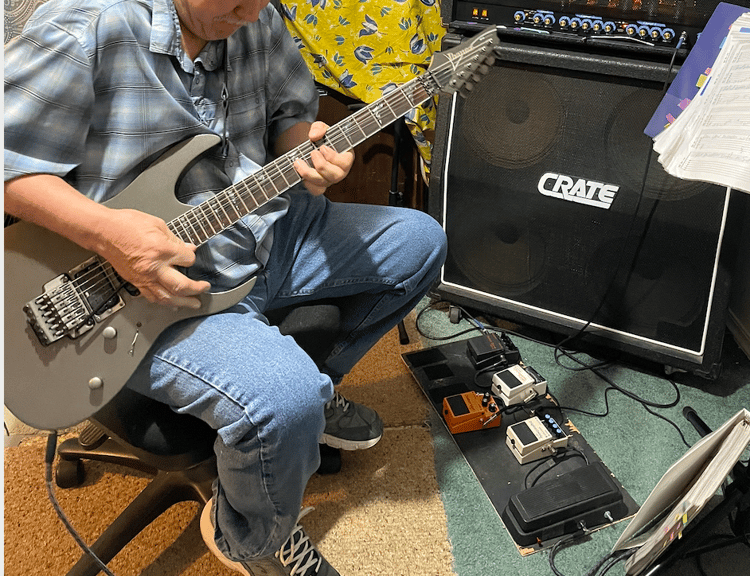
Becoming a skilled guitarist requires dedication and patience. You can set aside regular practice time, and don't be discouraged by initial difficulties. Every great rockstar started where you are now.
Joining the Guitar Community
Connecting with other guitarists can provide motivation and inspiration. Consider joining a local band, attending workshops, or participating in online forums to share your journey and learn from others.
Dive Deeper into the Electric Guitar
If you'd like to dive deeper into learning the electric guitar, I recommend you check out the book I authored, Electric Guitar 101.
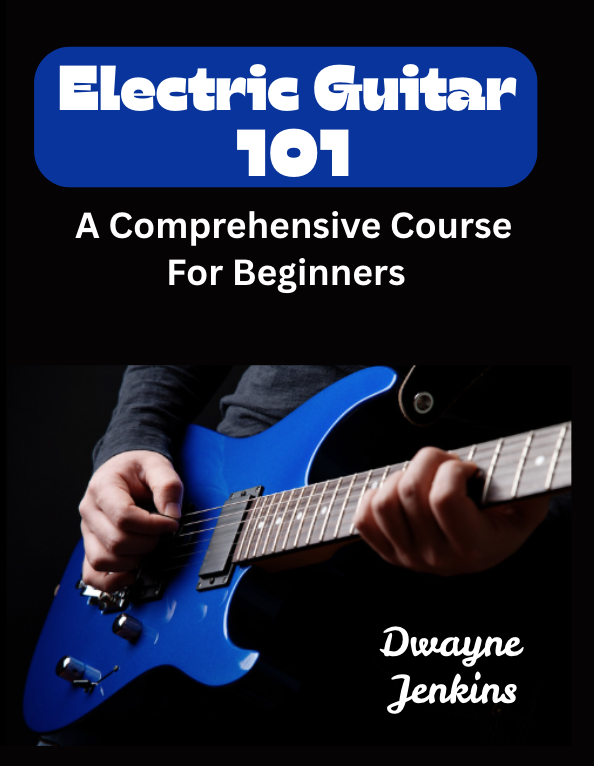
Electric Guitar 101 is the ideal place for you to start. It provides a simple step-by-step format that will lead you in the right direction. It touches on all the basics. Playing position, how to tune it, how to use a guitar pick, how to strum chords, chords in hundreds of popular songs, how to read basic notation, music theory, intro to lead guitar, and much, much more. Making this an excellent resource for students and teachers alike.
With pictures, diagrams, easy-to-read notation, exercises, and learning assessments, you will be progressing at playing the electric guitar in no time. With no better time to start than today. Available on Amazon and wherever books are sold, you'll be glad you did.
Final Thoughts
Mastering the electric guitar involves a blend of technical skills, creativity, and persistence. By focusing on these essentials, you'll be well on your way to becoming the rockstar you've always wanted to be. Keep practicing, stay passionate, and above all, enjoy the music you create. Thanks for your time today. If you have any questions, feel free to contact me through my website.
Sincerely, Dwayne Jenkins