Guitar scales are the building blocks of music, offering a framework for creating melodies, solos, and harmonies. Understanding and mastering guitar scales can significantly enhance your tone and expression, allowing you to convey emotions and ideas more effectively through your music. This lesson will guide you through the basics of guitar scales and how to use them to elevate your playing.
Understanding Guitar Scales
A guitar scale is a series of notes played in ascending or descending order. The most common scales include the major, minor, pentatonic, and blues scales. Each Scale has a unique sound and emotional quality:
- Major Scales: Bright and happy
- Minor Scales: Dark and emotional
- Pentatonic Scales: Versatile and commonly used in rock, blues, and pop
- Blues Scales: Infused with a soulful and expressive quality
Major Scales:
Major: 1 2 3 4 5 6 7
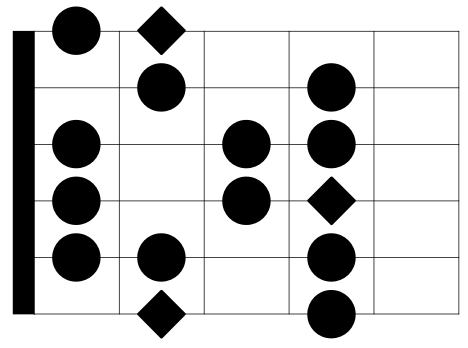
Major Pentatonic: 1 2 3 5 6
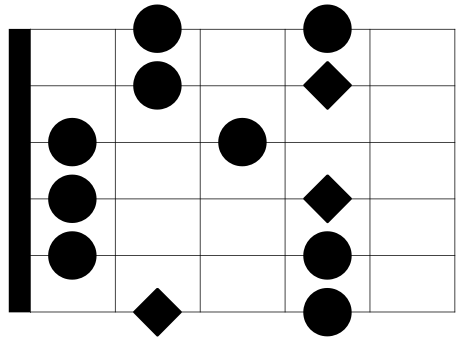
Major Blues: 1 2 b3 3 5 6
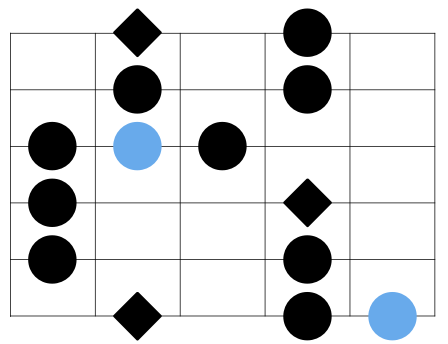
By understanding the notes within the Scale, you can alter them to create additional scales, just like creating additional guitar chords. This is the main benefit of knowing the notes along each string on the fretboard.
Minor Scales
Natural Minor: 1 2 b3 4 5 b6 b7
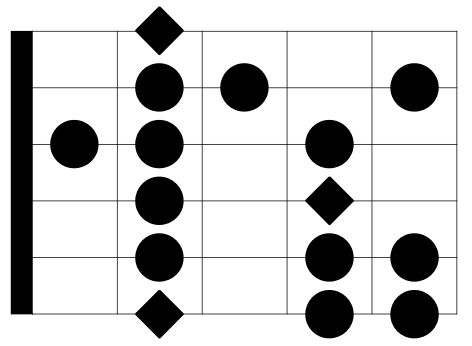
Harmonic Minor: 1 2 b3 4 5 b6 7
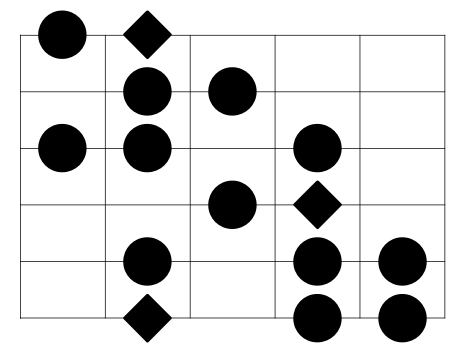
Melodic Minor: 1 2 b3 4 5 6 7
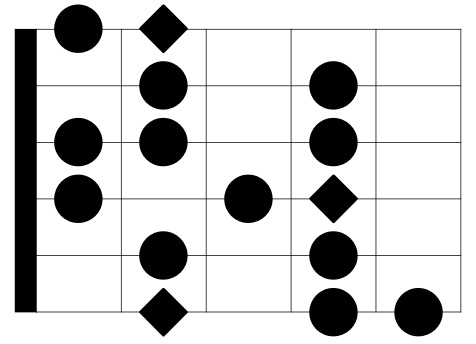
Can you see how altering a few notes in the major scale gives you the minor? Alter a few more notes, and you get two more minors. The harmonic and the melodic. These allow you to expand your color palette. Now you have four scales to work with: the Major, minor, harmonic minor, and the melodic minor.
Pentatonic Scales: 5-Note Scale
Major Pentatonic: 1 2 3 5 6
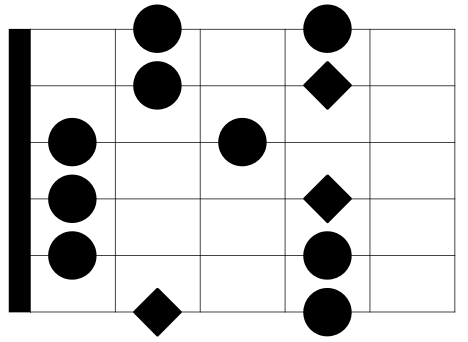
Minor Pentatonic: 1 b3 4 5 b7
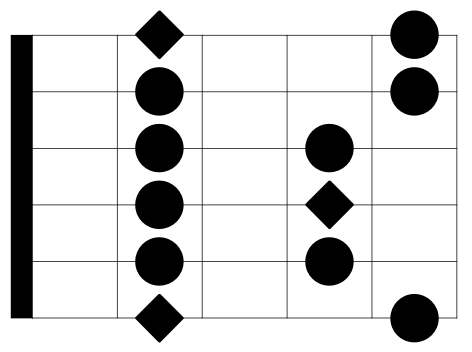
Blues Scales: 6-Note Scale (addition of the "blue" note)
Major Blues Scale: 1 2 b3 3 5 6
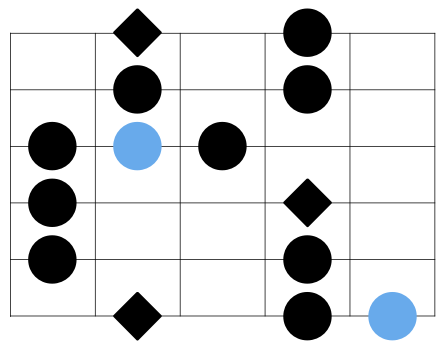
Minor Blues Scale: 1 b3 4 b5 5 b7
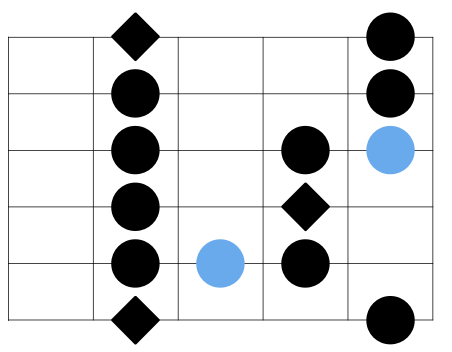
Can you see how the blues scales are an "extension" of the pentatonic scales? Can you see that by adding the "blue" note, you extend the pattern? By doing this, you not only open up avenues for more expression but also enhance your mastery over the fretboard.
Why Guitar Scales Matter
- Improvisation: Scales provide a roadmap for improvisation, allowing you to create solos on the spot. This is an essential skill to acquire, as it will enable you to craft expressive landscapes without needing sheet music.
- Technical Skill: Practicing scales improves finger strength, speed, and dexterity.
- Musical Understanding: Scales help you understand key signatures, chord progressions, and the structure of music.
Mastering the Basics
Learning the Major Scale
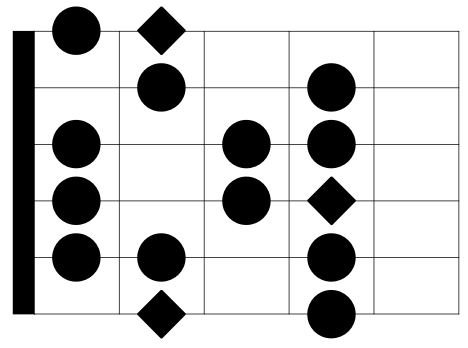
The major Scale is foundational in Western music. To play the C major scale, C, D, E, F, G, A, and B, follow this pattern on the fretboard:
- Start on the 3rd fret of the 5th string (C note)
- Follow the pattern: whole, whole, half, whole, whole, whole, half
- Practice ascending and descending the Scale
The major Scale is the foundation for all other scales. The reason for starting with the C major scale is that it has no sharps or flats. This makes it easy to learn and understand. If you master the interval pattern of the whole step and the half-step formula, you'll be able to find the notes of all 12 primary keys. Do that, and you'll be ahead of 99% of guitar players out there.
Exploring the Minor Scale
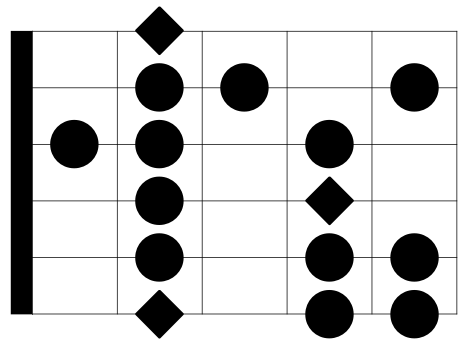
The minor Scale offers a contrasting mood. To play the A minor scale, use this pattern:
- Start on the 5th fret of the 6th string (A note)
- Follow the pattern: whole, half, whole, whole, half, whole, whole
- Experiment with different positions on the fretboard
Enhancing Tone and Expression
Using Scales for Emotional Impact

- Dynamics: Vary your picking attack and volume to add emotional depth.
- Articulation: Incorporate techniques like bending, sliding, and vibrato to express different moods.
Creating Melodic Solos

- Combining Scales: Mix major and minor scales to add complexity to your solos.
- Phrasing: Break scales into phrases to create musical sentences that tell a story.
Practice Tips
- Consistent Practice: Dedicate time daily to practice scales slowly, focusing on precision and clarity.
- Use a Metronome: Increase speed gradually while maintaining accuracy.
- Record Yourself: Listen to your playing to identify areas for improvement and track your progress.

By mastering guitar scales, you can unlock new dimensions of musical expression and creativity.
Whether you're writing a new song or improvising a solo, scales will give you the tools you need to enhance your tone and convey your musical ideas with clarity and emotion. Start integrating these scales into your practice routine today and experience the transformation in your playing.
Dive Deeper Into These Concepts
If you'd like to know more about how knowledge of the scales can enhance your guitar playing, I recommend you check out the book I authored. Learn Guitar Scale Theory
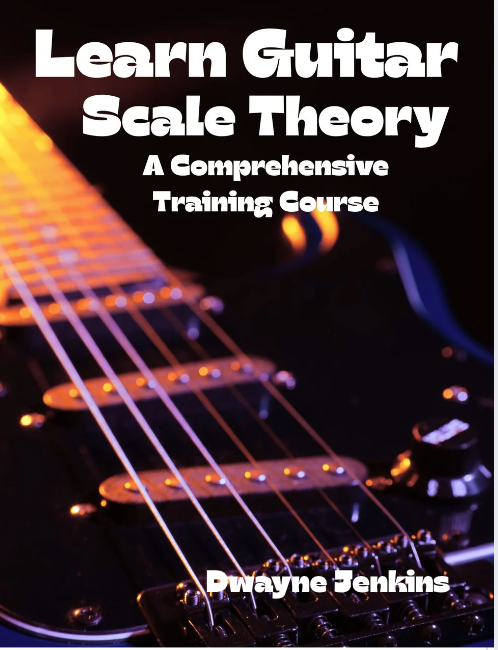
By learning the inner workings of guitar scales, you'll be able to craft more expressive guitar solos. You'll be able to unlock your full potential as a musician thanks to the understanding you gain. This will not only help you with playing lead guitar, but it will also allow you to become a better rhythm guitarist as well.
This book reinforces the lesson taught here today. By breaking down the scales in further detail and providing clear explanations through step-by-step instructions, diagrams, and exercise examples, the theory is brought into practical application.
Free Assistance Available
And on top of that, if you purchase the book currently on sale, you'll receive free email support from me if you have any questions about a lesson. My way of saying thanks for supporting my lessons. With that kind of assistance, you're guaranteed to be a success!
So if you're serious about taking your guitar playing to the next level, grab the book and know that I'm right here to help you. Thanks for your time today, and good luck with your guitar playing.
Sincerely, Dwayne Jenkins
Dwayne's Guitar Lessons